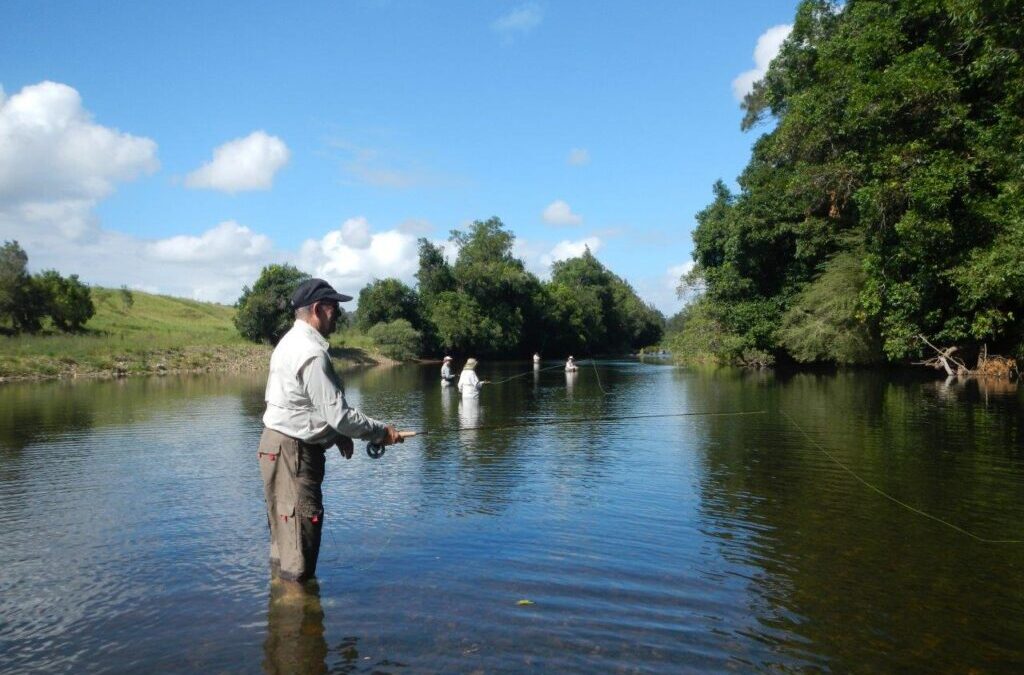

Tucked along the upper Hastings River, west of Wauchope, you will find Harty’s Plains and Kindee. These locations are favourite destinations for Club members. They chase Mullet, Freshwater Herring, and Bass. These waters offer a mix of smooth pools and gentle runs, which are perfect for light fly tackle and sight casting along the edges.
Freshwater Herring, in particular, are a club favourite — often found schooling in numbers and providing plenty of action for their size. Whether you’re targeting the hard-fighting herring, the surface-smashing Bass, or aiming for the ever-wary mullet, choose the right fly. It can elevate a good session into a great one. Here are some recommended patterns to try at Harty’s Plains and Kindee.
Recommended Flies
The following patterns offer a selection of flies for targeting freshwater herring and bass at Harty’s Plains and Kindee. While some have been adapted from patterns originally developed for other species, their versatility makes them well worth having in your fly box.
Sinking Flies
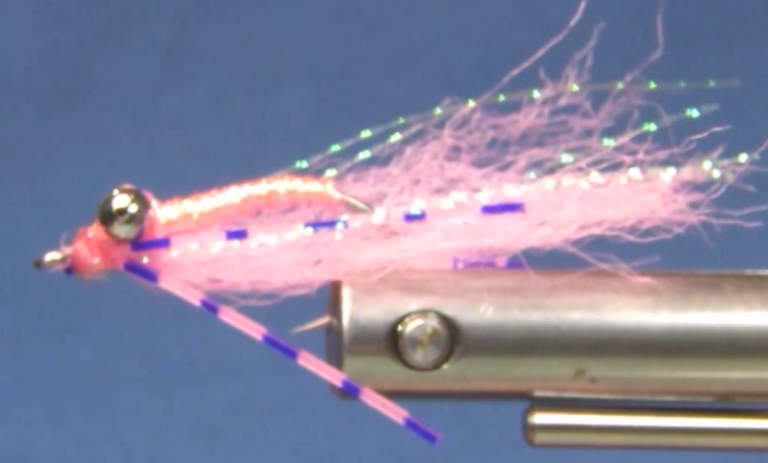
Carp Fly-Backstabber Hybrid


Although designed with carp in mind, this is a particularly versatile pattern. A particularly effective pattern for bass, also worth trying for freshwater herring.
The Backstabber–Barry’s Carp Fly Hybrid combines elements of two proven carp patterns to create a versatile fly with plenty of movement and attraction. Featuring weighted bead-chain eyes, a soft marabou tail, a buggy dubbing body, a flowing hen hackle collar and flexible legs, it has a lively, natural appearance in the water. The bead-chain eyes provide enough weight to get down towards the fish while helping the fly ride hook-up and avoid bottom debris.
Alternative Materials

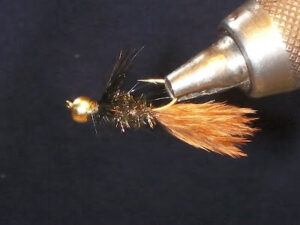
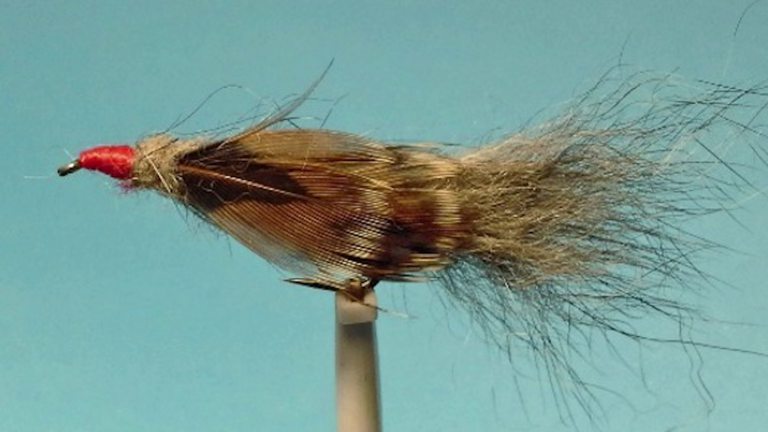
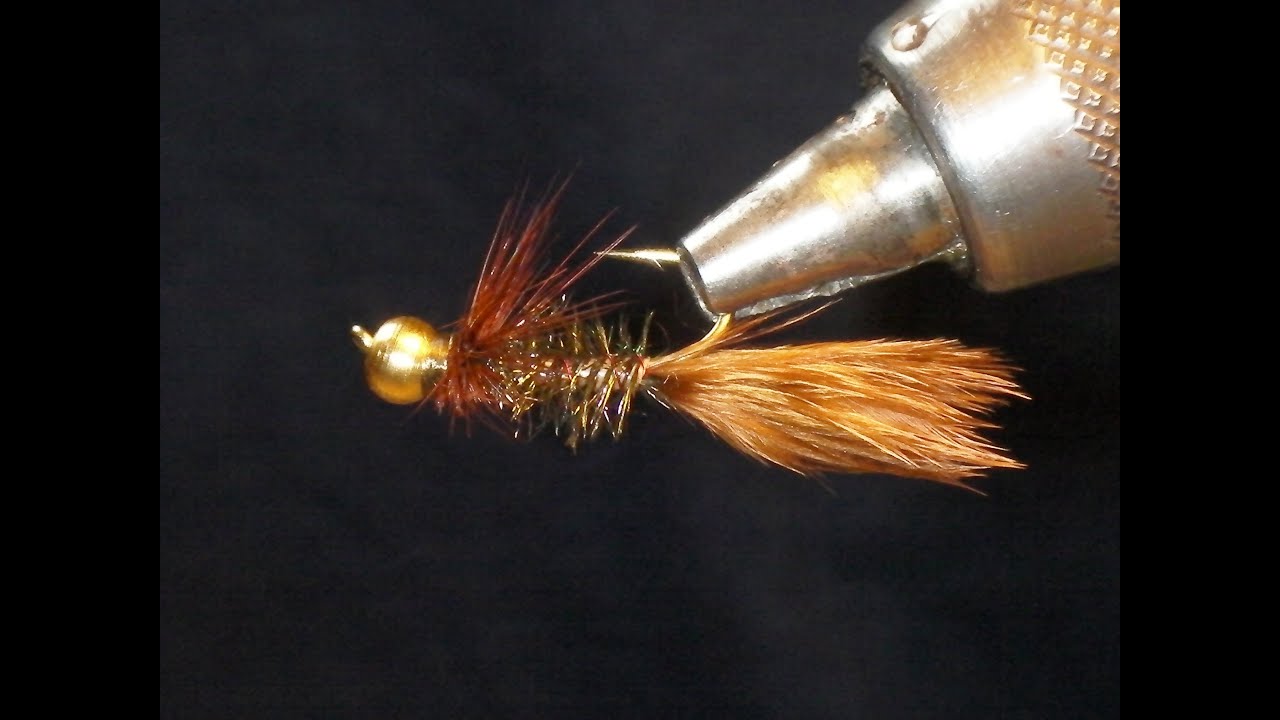
Beadhead Carp Fly
A simple but effective pattern, the Beadhead Carp Fly is designed to imitate a small nymph or minnow that fish might encounter while feeding along the bottom. It features a gold bead for added weight, a soft feather-fibre tail, a peacock herl body reinforced with copper wire ribbing, and a stout brown hackle that helps protect the fly from snagging on weed and debris.
Originally developed for targeting carp in deeper water or when fish are on the move, this pattern is well worth tying in a size 10 for Freshwater Herring. Its compact profile and beadhead make it a useful option when herring are feeding deeper in the water column.
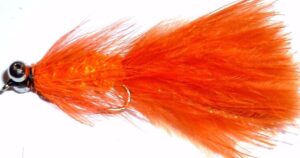
Orange Dog Nobbler
The Orange Dog Nobbler is a simple yet effective baitfish-style pattern, featuring a bright orange body with plenty of movement to attract attention. Its bold colour makes it particularly useful in coloured water or when fish need a little extra encouragement to strike.
For added weight and a more realistic head profile, small pieces of slit shot can be glued onto the front of the fly and painted to create an eye. This gives the pattern a little extra weight to help it reach deeper-feeding fish while adding to its fish-like appearance.

Olive Woolly Bugger
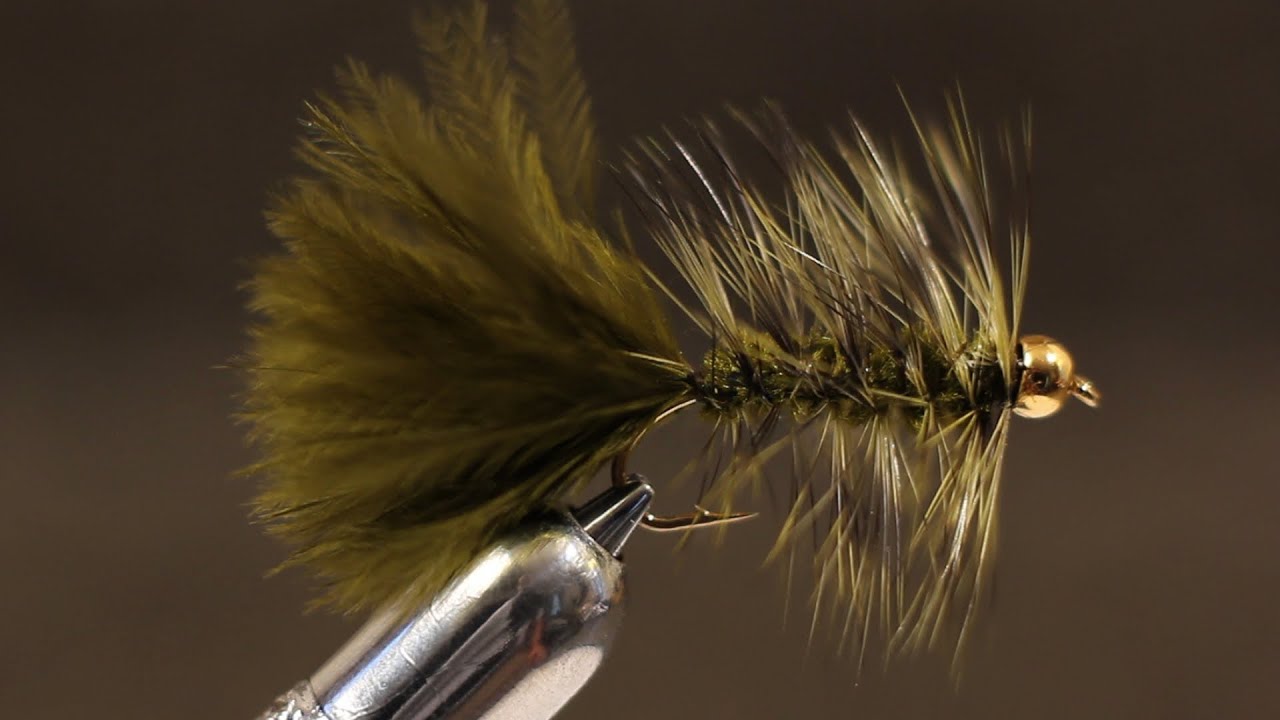
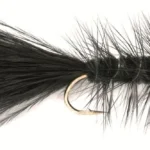
The Woolly Bugger is widely regarded as one of the most effective trout flies ever developed, but its versatility makes it equally valuable for Australian freshwater fishing. The olive pattern is an excellent imitation of small baitfish such as smelt and galaxias, while its marabou tail and hackle create plenty of movement in the water.
The Beadhead Woolly Bugger is particularly effective when targeting Australian bass, helping get the fly down to fish holding deeper in the water column.

Floating Flies

JOS Gurgler
The JOS Gurgler was developed by club member John O’Shaunessy and is primarily designed for targeting whiting. However, its versatility extends well beyond whiting, with bream, tailor, long toms and occasionally flathead also falling to this surface fly. It has also accounted for freshwater species such as herring, mullet, blackfish and even the occasional bass, making it a useful pattern for a variety of fishing situations.

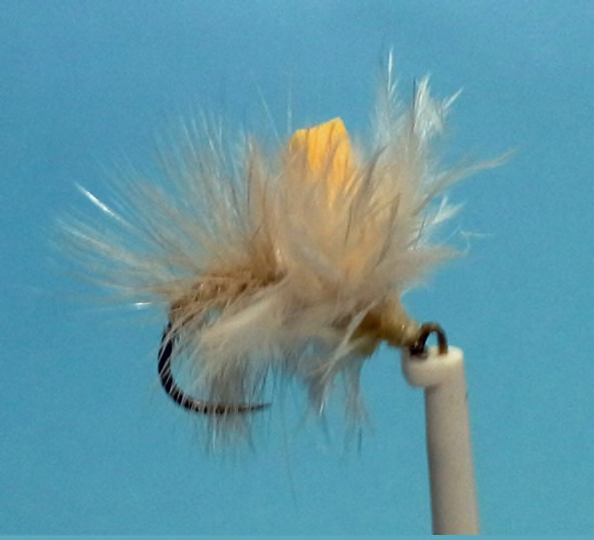
Red Tag
The Red Tag is a proven Australian favourite, particularly for trout feeding on the surface in rivers and stillwaters. Its buoyant construction makes it an excellent dry fly when fish are taking insects from the surface. It is also surprisingly effective for freshwater herring, making it a worthwhile addition to your fly box when fishing Harty’s Plains and Kindee.
Fishing Techniques
Fishing the Surface
The Red Tag should be fished with plenty of floatant. This ensures it stays on the surface or just in the surface film. Use an unweighted nymph. Tie it with a very light line – 4lb. Attach it to the bend of the hook. These are most effective in moving water in the deeper parts of the river, using a floating line.
The JOS gurgler can be fished around the fringes. It is effective where there are fish moving and breaking the surface. It also works just under the surface, again using a floating line.
Fishing Subsurface
Weighted nymphs are better fished with a floating line where the water is moving a little faster.
Fishing Deeper Water
The Carp Fly and its alternatives can be fished using floating lines. They can also be fished using intermediate lines. The intermediate line is more effective in deeper and faster moving water.
Casting Techniques
Remove Slack from the Fly Line before the Cast
Casting in the saltwater and the fresh requires care. It is important to minimise the disturbance of the line on the water when starting to recast. This is even more critical in the salt. We use heavier lines and larger flies, so it is even easier to spook the fish.
There are 2 methods to do this:
- Point and Cast. Point the rod tip at the fly. Slowly pull the line until the slack is removed. Then, and only then, should you lift the rod and attempt the back cast. Lift the rod slowly at first and then gently accelerate into the back cast.
- Use the Roll to Start. If there’s a line on the water and you need to recast quickly—like when you spot a fish—use the roll cast. This helps lift the line from the water instead of making a back cast. Begin by gently moving the line, lifting the rod to the side and back as you would in a roll cast to remove slack, then perform your normal overhead cast. The roll cast is effective for getting a sinking or intermediate line to the surface for a proper overhead cast.
So there are two benefits from removing the slack from the line before you attempt a cast – with no slack in the line the rod loads early so you can recast quickly with a minimum of false casts and the disturbance on the water has been reduced and will not scare the fish.
Cast to Use – Reach Mend
As most of the fishing at Harty’s Plain is across the flow of the river – the reach mend is critical to help eliminate drag on the fly – fish hate drag, they think it is unnatural. The flies that catch fish float naturally down the river. Check out Carl McNeil’s Reach Mend on YouTube, part of Carl McNeil’s DVD “Casts that Catch Fish”.
Related Posts
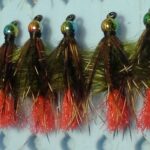
 Fed's Malleefowl Soft Hackle Red Tag is a vibrant reinterpretation of the timeless Red Tag fly, combining classic design with…
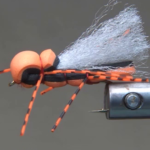 Fed’s Orange Bass Flopper gets an update with FTD Congo Plus White for the wing. This surface fly builds on…
 Fly Fishing Leaders, their construction and formulae for trout, steelhead and salmon. Having an understanding of leader material and a…
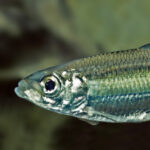 Freshwater Herring (Potamalosa richmondia) are lively native Australian fish found in coastal rivers and estuaries. A favourite among Hastings Fly…

 The Orange Beadhead Red Tag is a fly Paul has had great success in the past. It works great for…
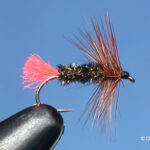 The Red Tag is a classic, versatile dry fly for trout feeding on the surface in rivers and still water….
 The Red Tag Soft Hackle Bass Fly, created by Paul Fedeles, is a clever adaptation inspired by Rick Passek's (the…
 The Woolly Bugger is a versatile fly pattern that catches fish in lakes and rivers. Explore a selection of variations…
 The Woolly Bugger is a versatile fly pattern that catches fish in almost any lake or river. Its success comes…