

Throughout Australia the Red Tag is excellent fished to surface feeding trout in rivers or still water (it is also a must-have for herring!). The fly is a half imitator and half attractor; the red tag, the peacock herl and to some extent the brown hackle attracting the fish. Because the fly is beetle shaped it is also dynamite when trout are feeding around trees or other structures located in or near the water that beetles inhabit.
Fishing
The Red Tag should be fished with plenty of floatant to ensure it stays on the surface or just in the surface film. It can be fished with an unweighted nymph tied with a very light line – 4lb – to the bend of the hook. These are most effective in moving water in the deeper parts of the river, using a floating line.

Materials:
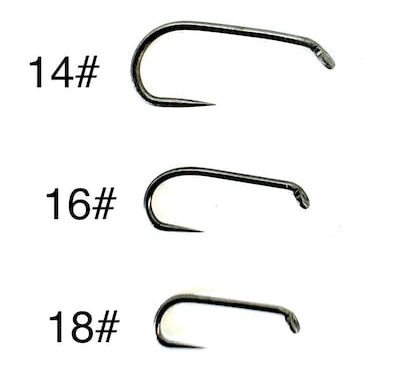
- Hook:Size 14 to 18 dry fly
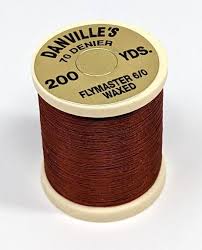
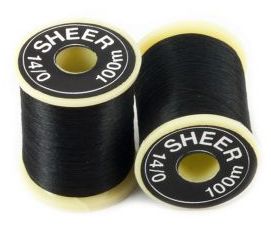
- Thread:Brown or Black
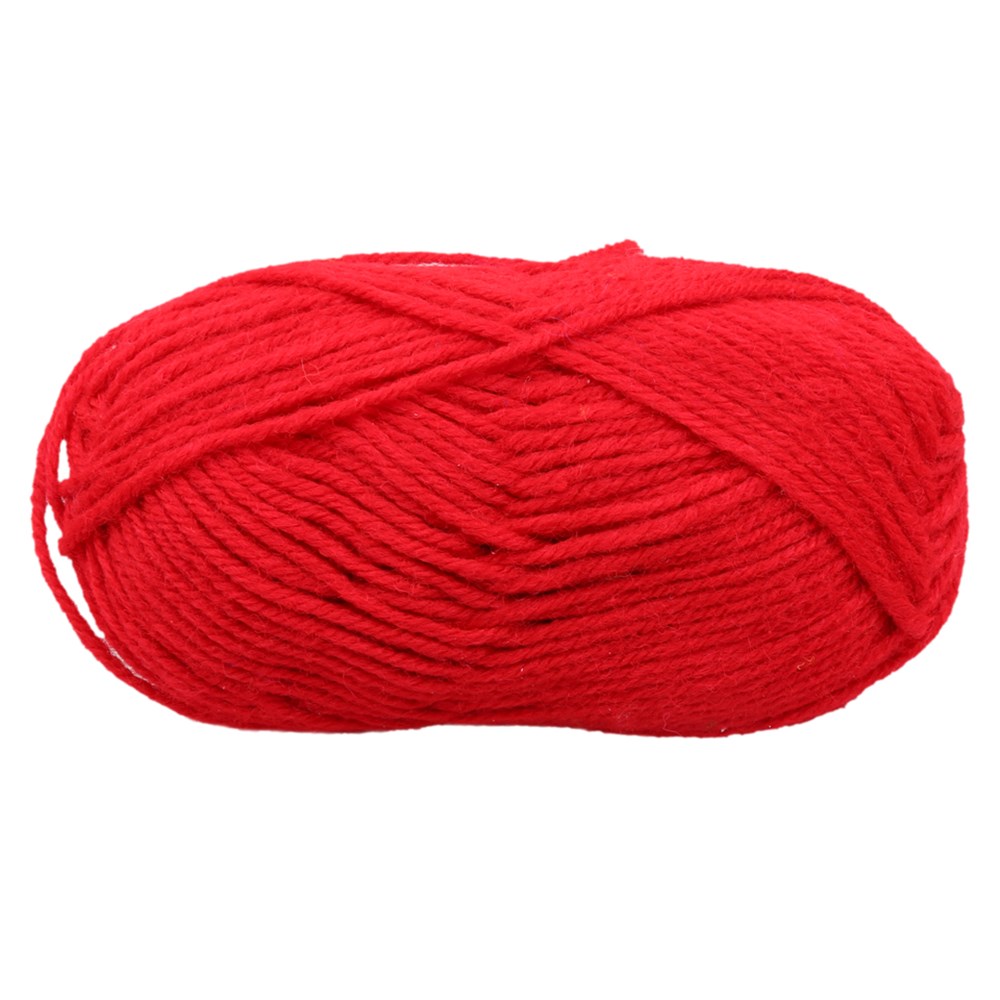
- Tag:Red wool
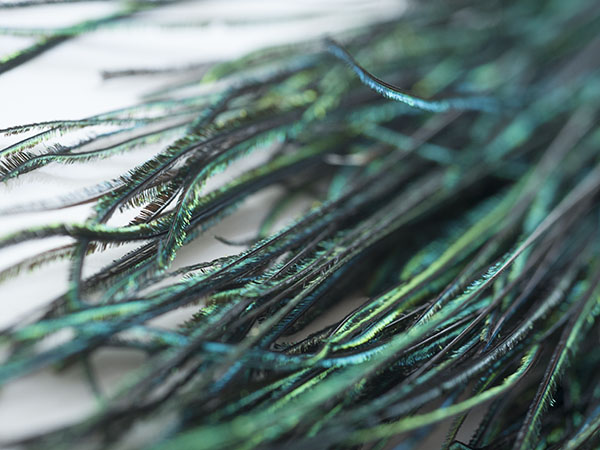
- Body:2 or 3 peacock herl strands
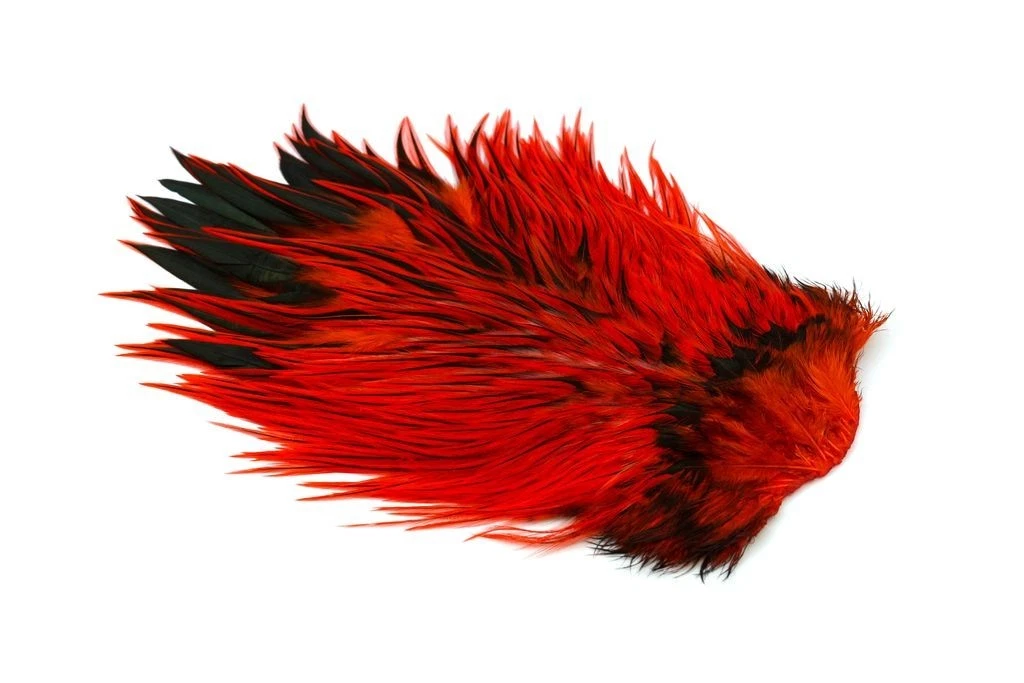
- Hackle:Bright natural red hackle
How To Tie the Red Tag
Tying instructions: Diptera.co.uk,
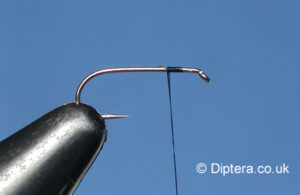
Catch the thread onto the hookshank.
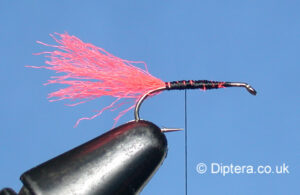
Take a bunch of Red Wool and secure along the hookshank. Stop winding the thread at a position opposite the barb.
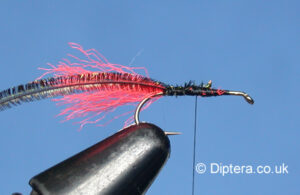
Take a few peacock herls and secure to the hookshank tips first.
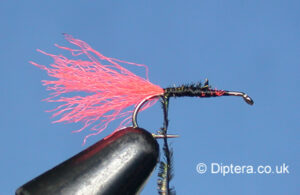
Spin the peacock herls around the thread. (This will make the peacock herl more robust and doesn’t require a wire rib to reinforce the herls and hence reduce the weight of the fly which is ideal for smaller hook sizes).
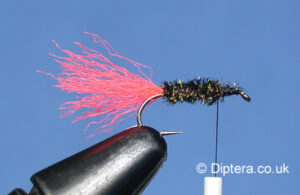
Wind the peacock herls up towards the eye. About 1/3 of the hookshank length from the eye, tie off the peacock herls and trim any waste.
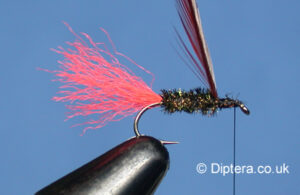
Take a brown cock hackle and catch in where the peacock herls finished. The barb length should be at least the size of the hook gape. I personally prefer 1.5 times.
TIP: If you need the fly to sit lower in the water, it is very easy to trim the hackle under the fly.
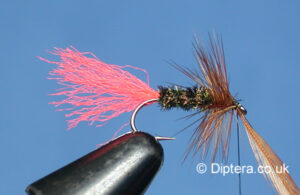
Wind the hackle up to the eye. The number of winds of hackle, depends on how bushy the hackle will be. Secure the hackle with thread and trim any waste hackle.
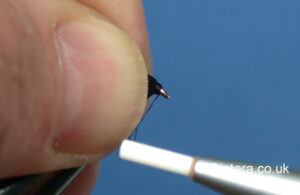
Take hold of the head hackle with your left hand and brush it back until only the thread is exposed. Create a neat head with the thread, whip finish and varnish.
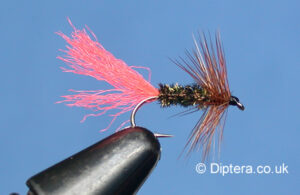
The only thing left to do now is to trim the tail to length. Take hold of the red wool in your left hand and twist it slightly, take a pair of sharp scissors and perform a single cut across the wool.
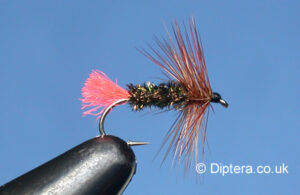
The finished fly.
Related Posts
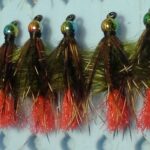
 Fed's Malleefowl Soft Hackle Red Tag is a vibrant reinterpretation of the timeless Red Tag fly, combining classic design with…
 Freshwater Herring (Potamalosa richmondia) are lively native Australian fish found in coastal rivers and estuaries. A favourite among Hastings Fly…
 Explore Harty’s Plains and Kindee on the upper Hastings River, two favourite fishing destinations for Hastings Fly Fishers. Discover recommended…
 The Orange Beadhead Red Tag is a fly Paul has had great success in the past. It works great for…


