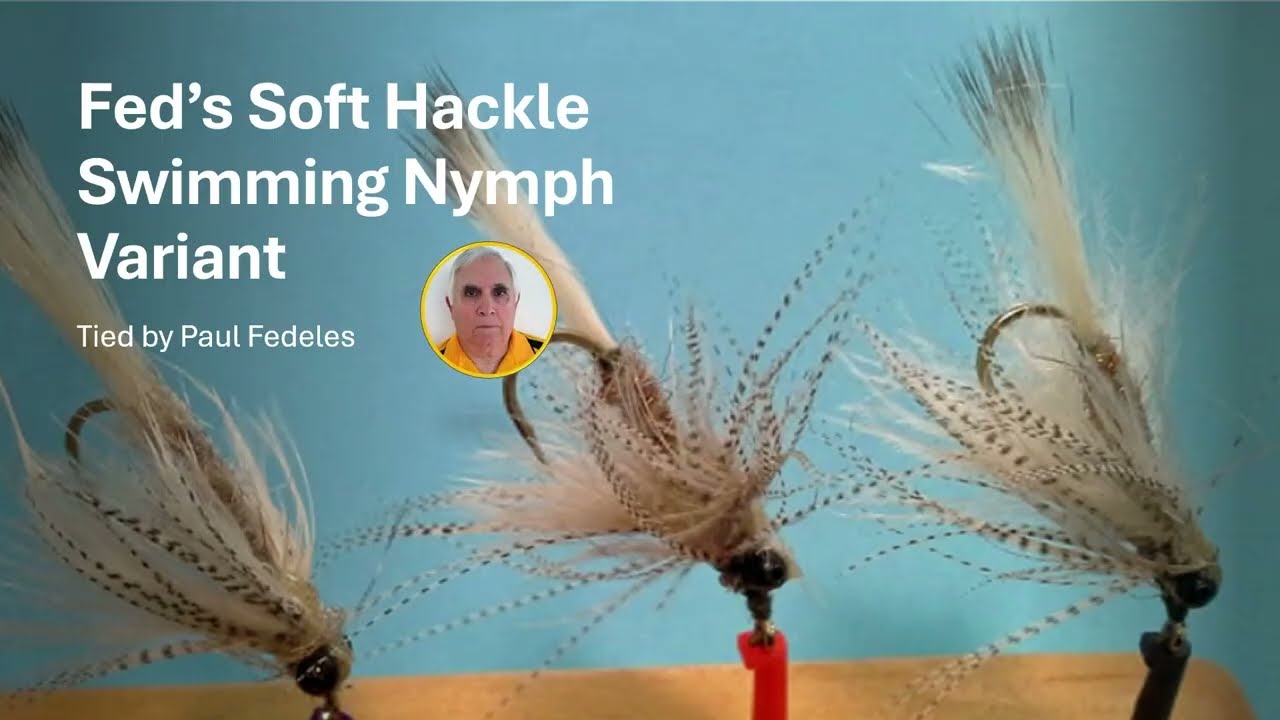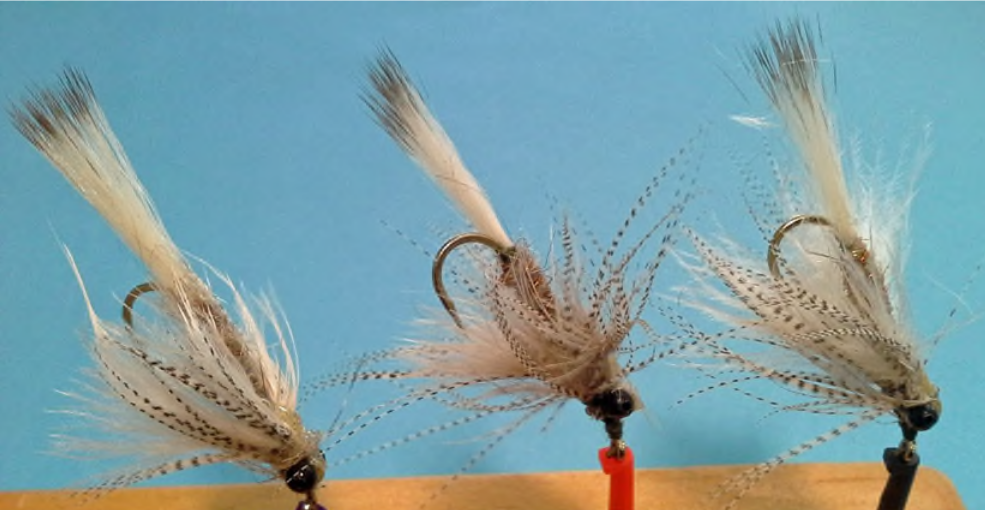

Fed’s Soft Hackle Swimming Nymph Variant is Fed’s take on the Soft Hackle Swimming Nymph, a simple and highly suggestive fly designed to imitate a swimming or emerging nymph.
The original pattern uses rabbit fur dubbing for the body and partridge for the soft hackle. Fed has made a few material substitutions that give his version a distinctive appearance and slightly different character in the water.
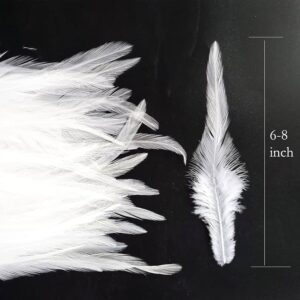
Instead of rabbit fur, the body is dubbed with rust brown possum, while white saddle hackle soft fibres provide the movement normally supplied by partridge. A small bundle of natural wood duck wing fibres adds a subtle contrasting element, with a light brown Gummy Back wing case completing the pattern.
The result is a buggy, mobile nymph with a warm brown body, pale soft hackle and translucent wing case. Like many soft-hackle flies, it can be particularly effective when allowed to move naturally in the current or rise during the swing.
Materials
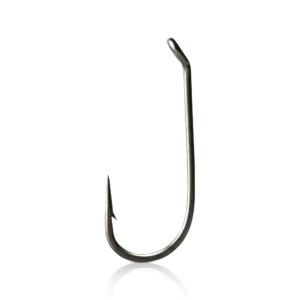
- Hook:3x size 6
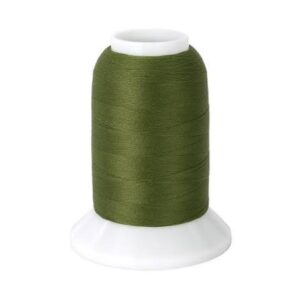
- Thread:Woolly Nylon, olive.
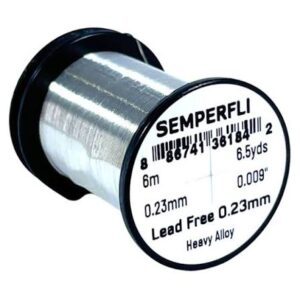
- Weight:Lead-free wire 14 turns of 0.25.
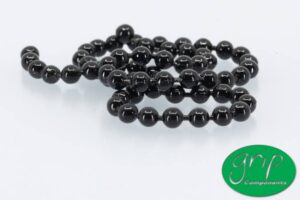
- Eyes:Ball Chain, black.
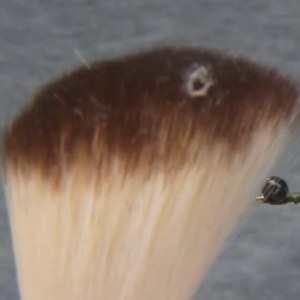
- Tail:Polyester makeup brush
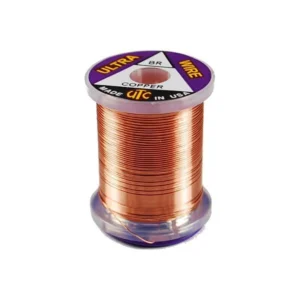
- Ribbing:Brass Wire.
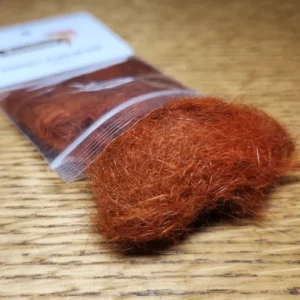
- Body:Rust brown possum.
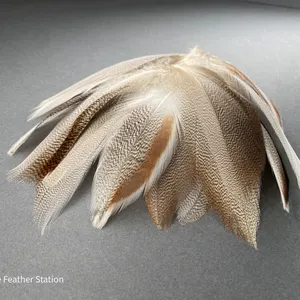
- Thorax:White saddle hackle soft fibres
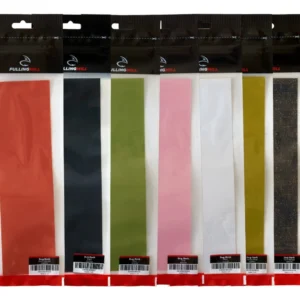
Wood duck wing fibres, Natural. - Wing case:Light brown Gummy bug back.
Tying Instructions
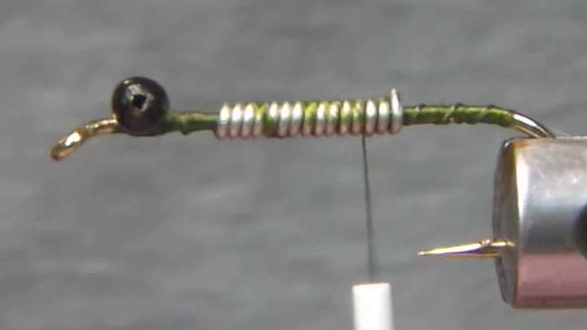
- Tie in the lead-free wire and bead-chain eyes.
- Tie in the makeup brush fibres for the tail, spreading the fibres evenly.
- Tie in the brass wire for the ribbing.
- Dub the body back to approximately halfway along the hook shank.
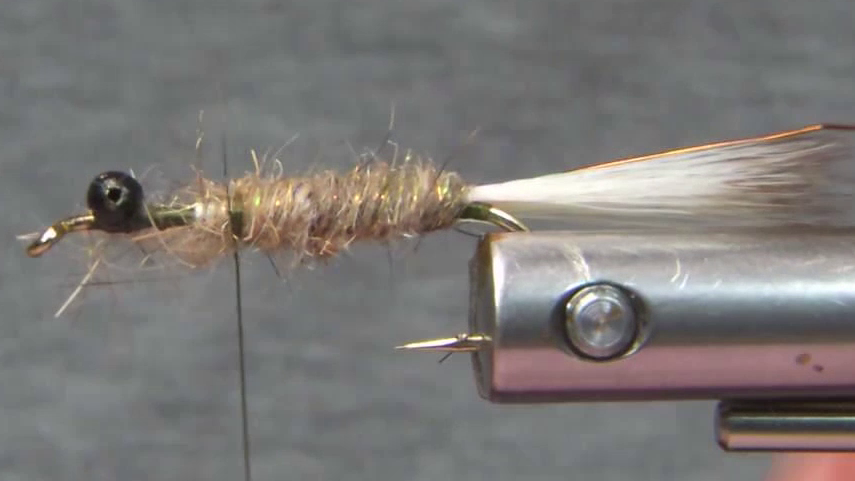
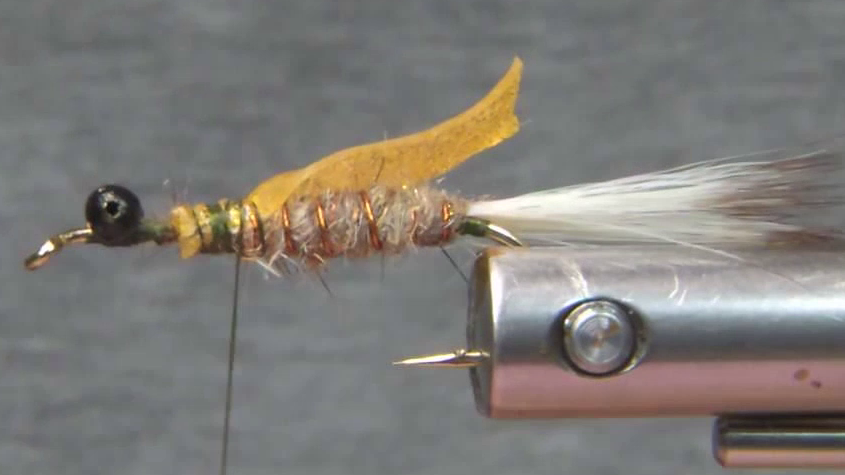
- Counter-wrap the brass wire to form the ribbing and secure it.
- Tie in the wing case material at the rear of the thorax.
- Tie in the soft-hackle feather and make touching turns to form the thorax.
- Tie in the wood duck fibres by their tips, then wrap them forward to form the wing.
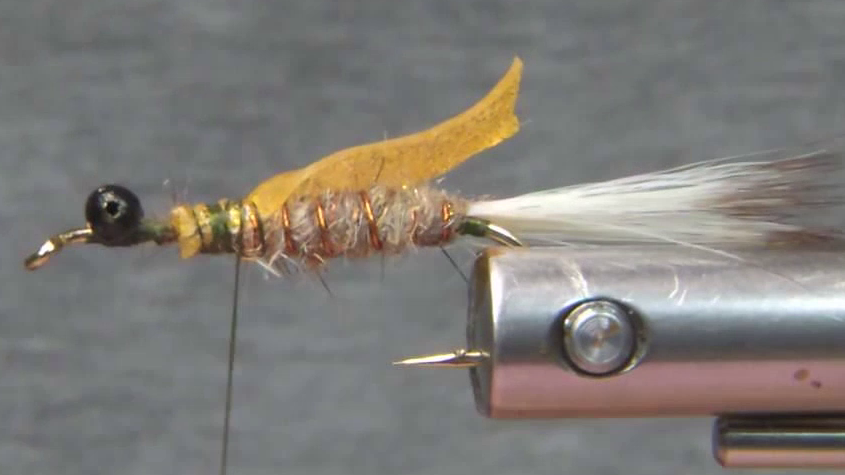
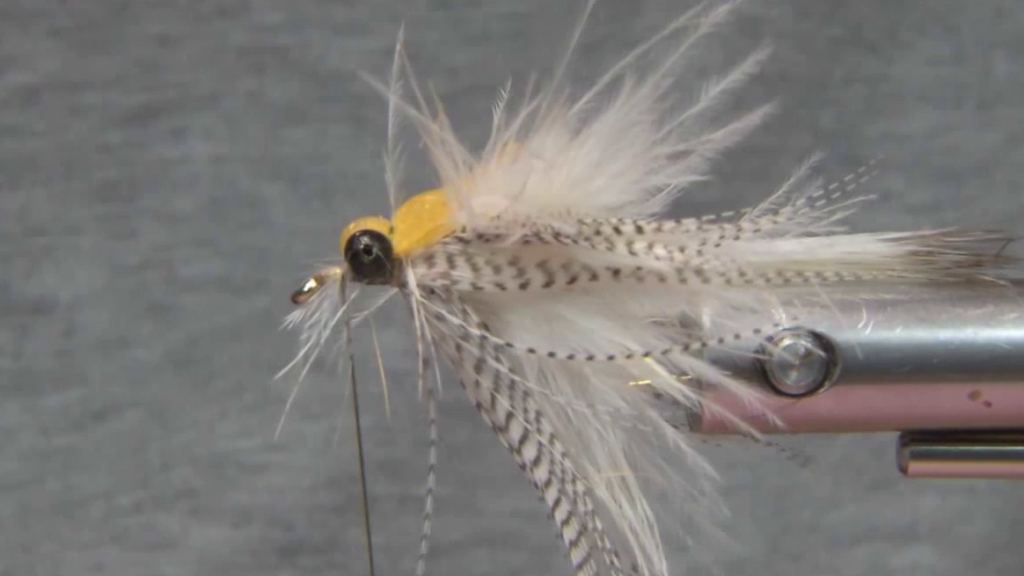
- Fold the Gummy Back over the soft hackle and tie it off securely.
- Fold the Gummy Back back over itself and tie it off behind the eyes.
- Move the thread forward and position it in front of the eyes.
- Half-hitch and whip finish.
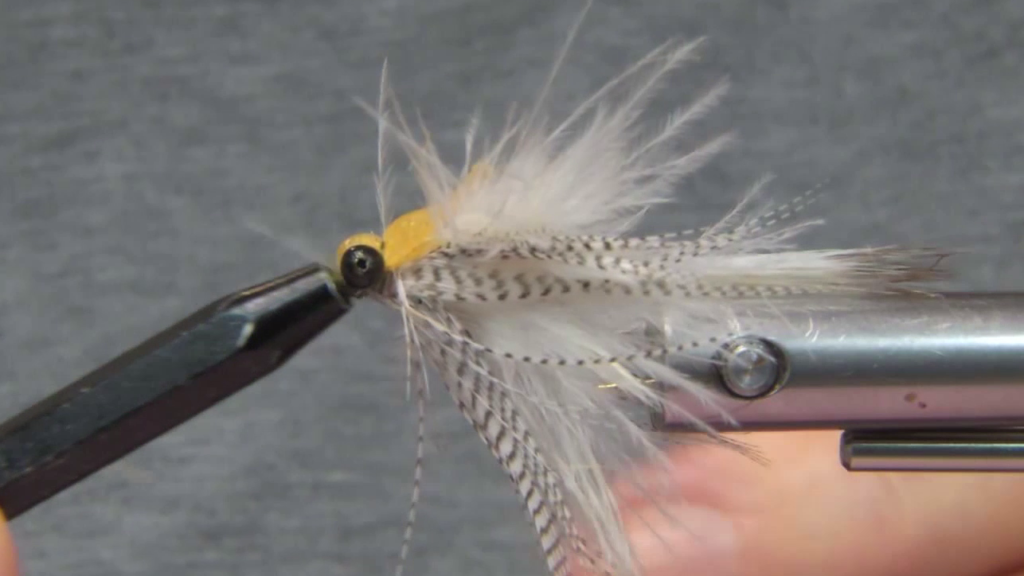
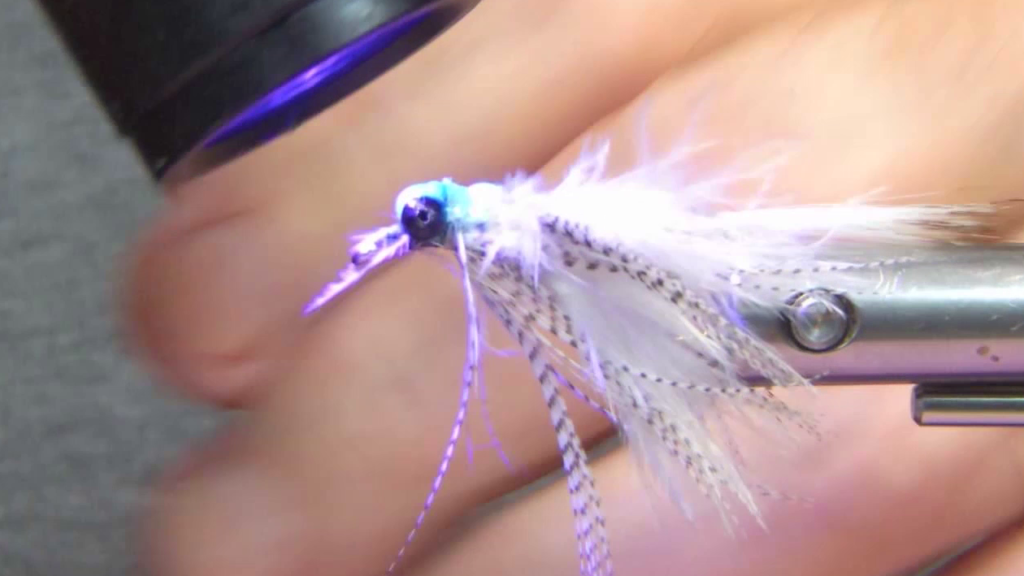
- Coat the wing case with UV resin and cure it.
- Use a hair dryer to train the feathers, directing them into the desired position.