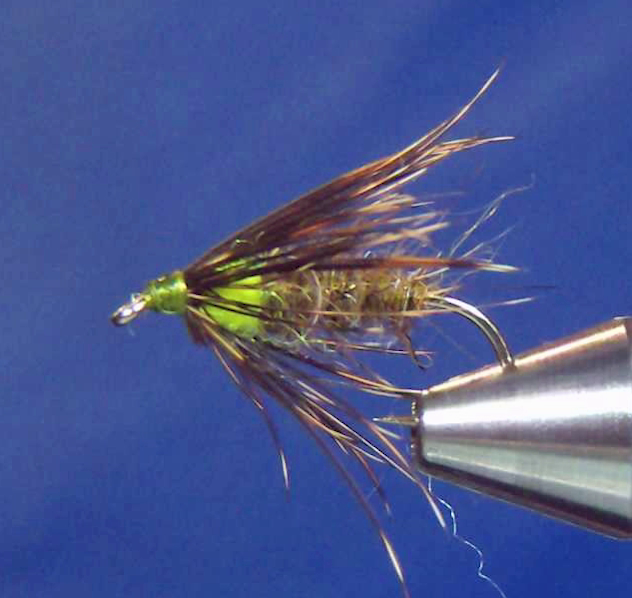
The Improved F Fly is a simple, effective CDC dry fly tied by John Kreft of RiverKeeper Flies. Because the Improved F-Fly is designed to imitate adult caddisflies, it features a fuller dubbed body and a buoyant CDC wing. As a result, it is particularly useful when trout are feeding on caddis near the surface. It builds on the original F Fly, developed by Slovenian fly tyer Marjan Fratnik, which uses a fine thread body and CDC feathers to create a minimalist, highly effective dry fly.


Materials
- Hook:Daiichi 1100, 1110, or 1182, #12 – 22 (or a similar dry-fly hook)
- Thread:8/0, to match the body colour (Rusty Dun in the example)
- Body:Superfine dubbing to match insect (Tan Spirit River UV2 Fine & Dry dubbing, or Zelon dubbing)
- Wing:Two CDC feathers of similar size, with plenty of fibres


Tying Instructions

- Debarb the hook and secure it in the vice.
- Start the tying thread just behind the eye and lay a thread base along the shank to the bend.
- Form a dubbing noodle on the thread. The body should be fairly substantial, as caddisflies generally have a fuller profile than mayflies.
- Wrap the dubbing forward from near the bend, building a tapered body. Stop about one eye-length behind the hook eye to leave room for the wing and head.


- Select two feathers of similar size, with plenty of fibres along both sides. Match their curves, align the tips and gently stroke the fibres together to form the wing.
- Position the CDC feathers along the hook so the wing extends slightly beyond the length of the hook shank. Check the length before securing them.
- Place the feathers on the near side of the hook. Secure them with two loose thread wraps, then tighten carefully. The thread’s torque should roll the feathers towards the top of the hook. Continue with touching turns to secure them firmly.
- Lift the remaining CDC feather ends and trim them diagonally at approximately 45 degrees, leaving short butt ends beneath the wing. These help support the wing upright and contribute to the fly’s flotation.


- Pull the wing back into position and gently spread the fibres with your thumb. Make a few thread wraps to form a neat, rounded head, trimming any stray fibres.
- Apply a little head cement to the thread, then make a five-turn whip finish immediately behind the eye. Ensure the hook eye remains clear.
The Improved F Fly is ready to fish. Experiment with body colours and hook sizes to match local caddis and other insects trout are feeding on.