
When our club members head to Dunmore Trout Waters for one of our semi-annual fishing trips, there is always one fly that seems to find its way onto the end of someone’s leader: the good old Woolly Bugger!
But there are plenty of other flies worth trying.
The Dunmore Six is a series of six flies that Paul suggests putting to the test at Dunmore. They aren’t necessarily patterns that have been extensively field-tested there, but they offer some interesting alternatives when you’re tempted to reach for the Woolly Bugger yet again.
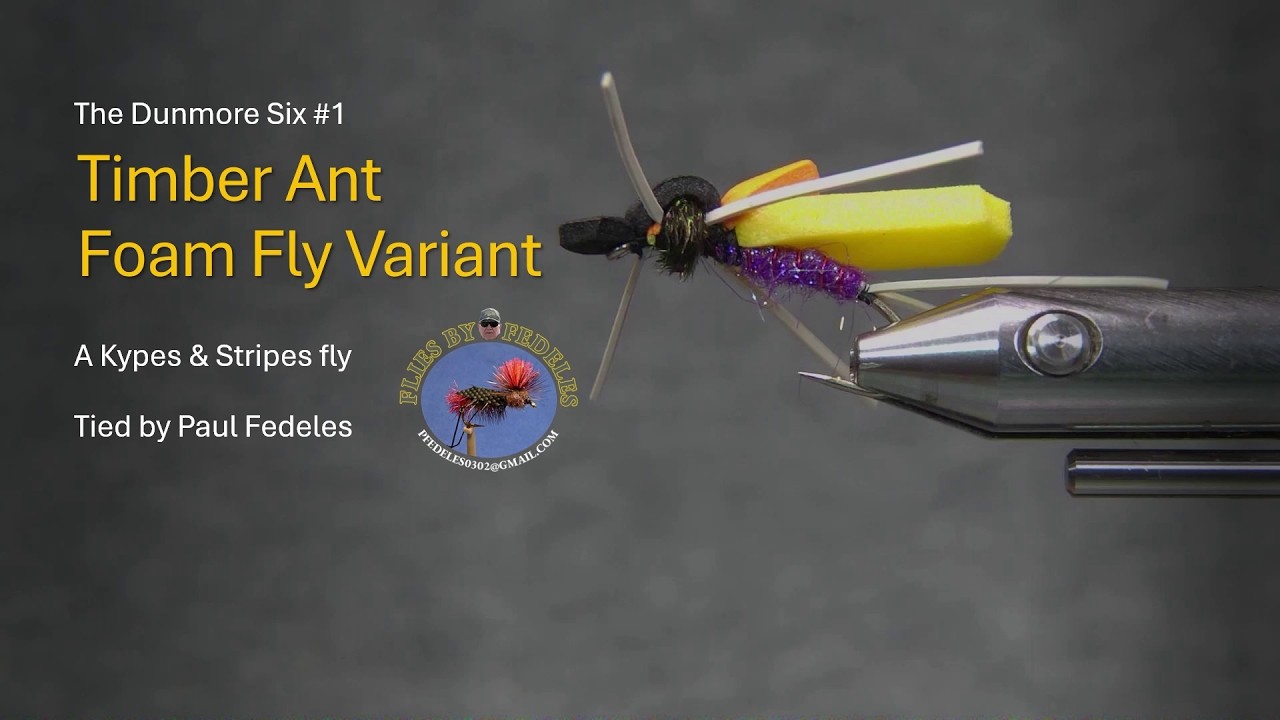
We’ll start the series with the Timber Ant Foam Fly Variant; a versatile foam terrestrial pattern originally developed by Kypes & Stripes.
Timber Ant
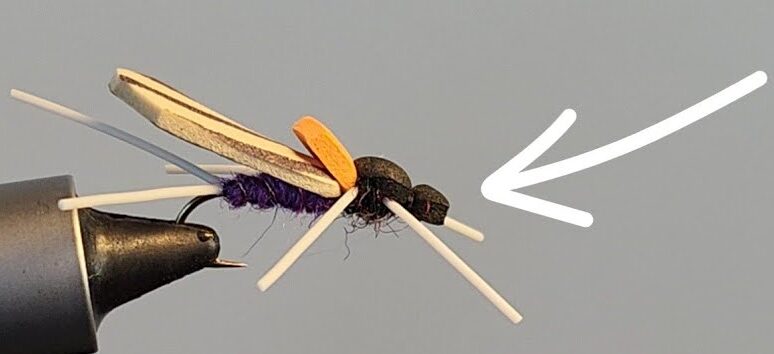
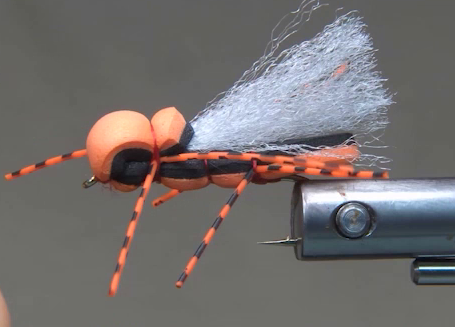
The original Timber Ant is a foam fly tied with a slightly different profile to many conventional foam terrestrials. Rather than sitting completely on top of the water, the pattern is designed to sit at an angle, with the foam providing plenty of flotation while the dubbed body hangs down into the surface film.
This gives trout a different look from a typical high-floating foam fly. Instead of seeing only the silhouette of the fly from below, the fish also gets a substantial body beneath the surface, along with the movement of the rubber legs.
The Timber Ant is also an easily adaptable pattern. It can be tied in different sizes and colours, with plenty of scope to experiment with the foam, dubbing, rib and legs. Although primarily intended as a trout fly, the pattern has also proved effective for panfish and bass.
Timber Ant Foam Fly Variant
For The Dunmore Six, Fed has put his own spin on the Timber Ant, retaining the basic foam construction and distinctive profile while changing several of the materials and colours.
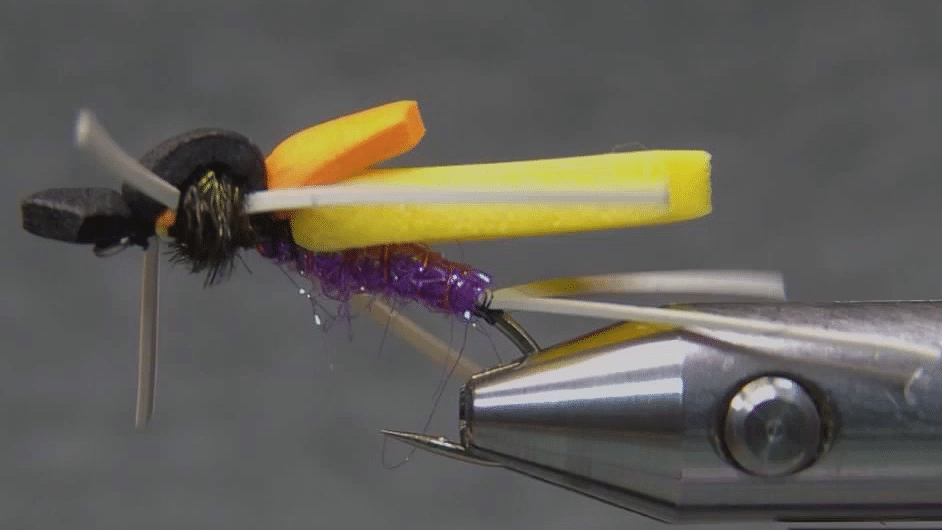
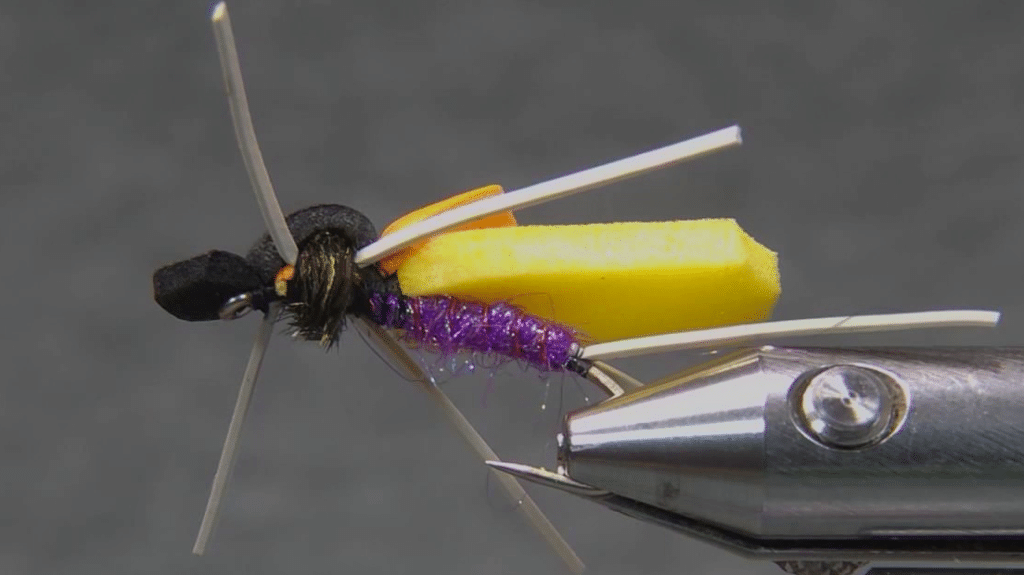
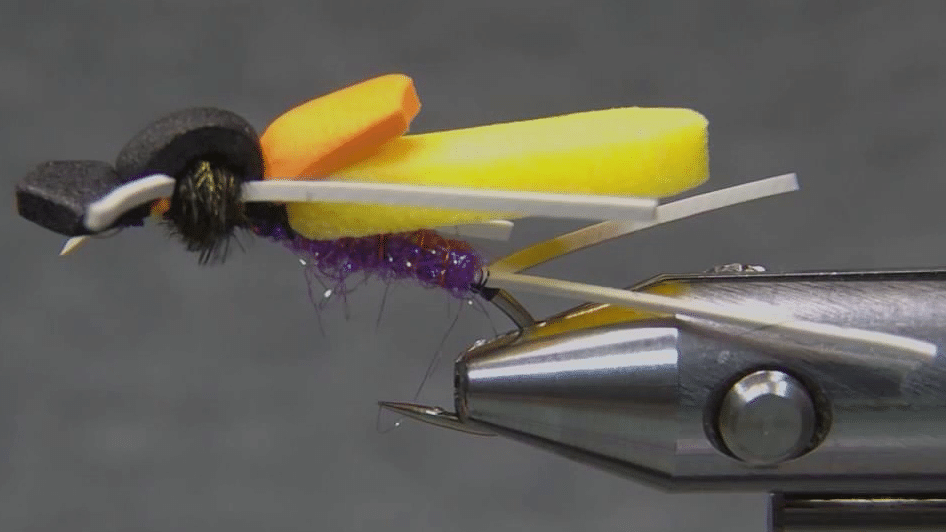
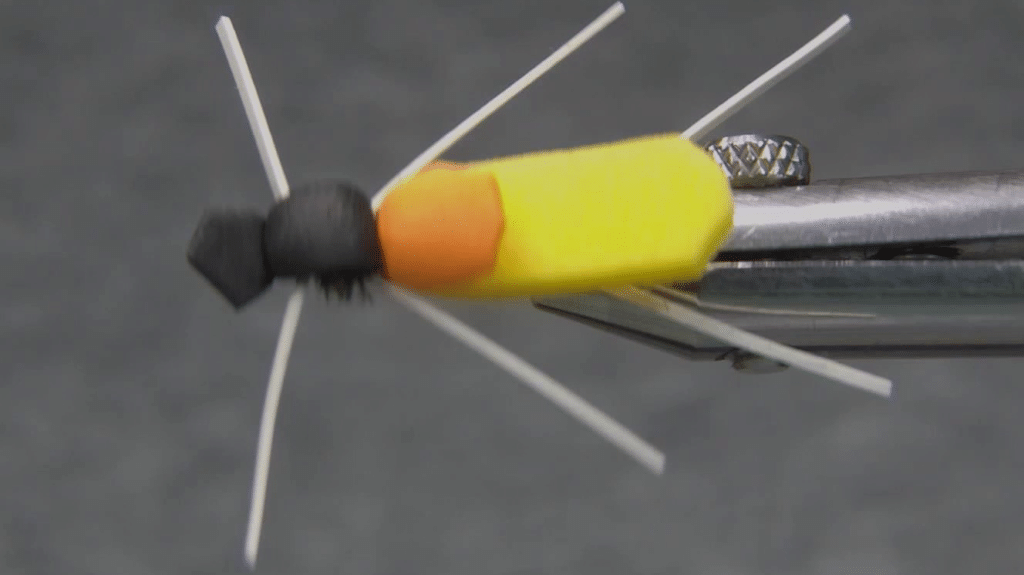
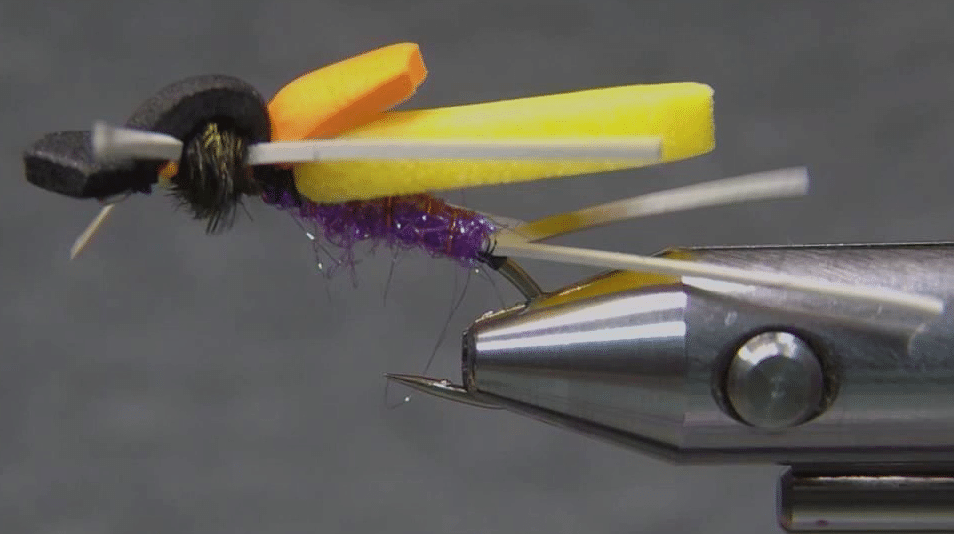
Fed’s version uses a yellow striped craft-foam wing, backed by orange foam and a black foam wing case. Purple ice dubbing forms the body, while a peacock herl thorax adds a little extra colour and flash. The result is a highly visible terrestrial with plenty of contrast and a slightly different appearance to the original.
One of the interesting features of the Timber Ant design is the way it sits in the water. The foam provides plenty of flotation, while the dubbed body sits lower in the surface film. Rather than presenting only a high-floating profile, the fly exposes more of its body beneath the surface, giving trout a different look from many conventional foam terrestrials.
It’s also an easy pattern to adapt. Tie it smaller for trout streams, scale it up for larger fish, or experiment with different foam and leg colours. The Timber Ant is a simple, versatile foam fly that deserves a place in any terrestrial fly box.
Materials
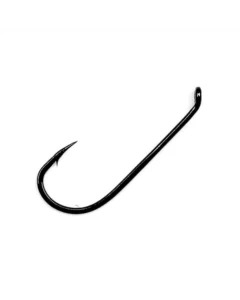
- Hook:Standard dry size 10.
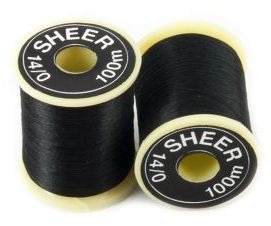
- Thread:Sheer size 14/0 black.
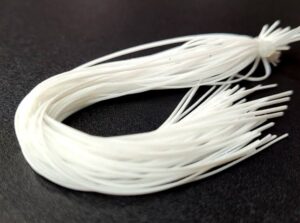
- Legs:Small white – colour optional.
- Tail:One white rubber leg.
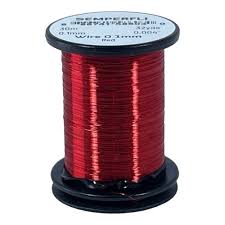
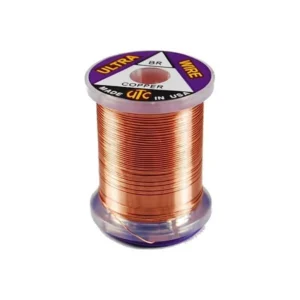
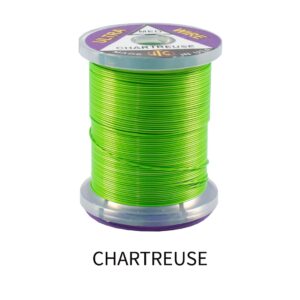
- Rib:Copper, Chartreuse or Red wire.
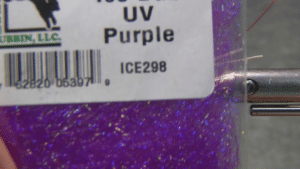
- Body:Ice dubbing purple.
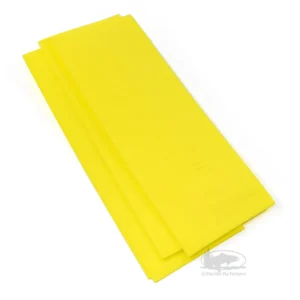
- Wing:Yellow striped craft foam.
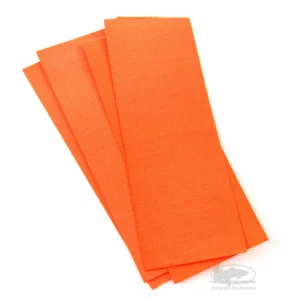
- Wing 2:Orange craft foam.
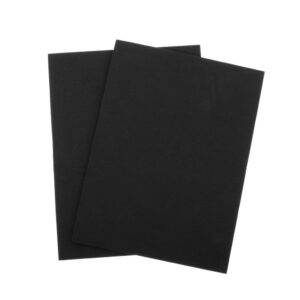
- Wing case:Black craft foam.
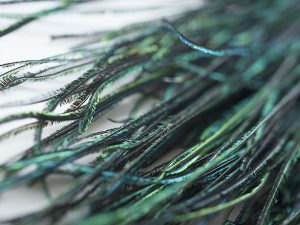
- Thorax:Peacock herl.
Tying Instructions
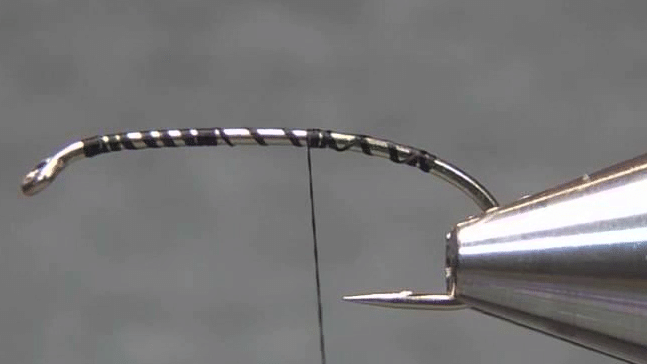
- Crush the barb.
- Cover the hook shank with thread.
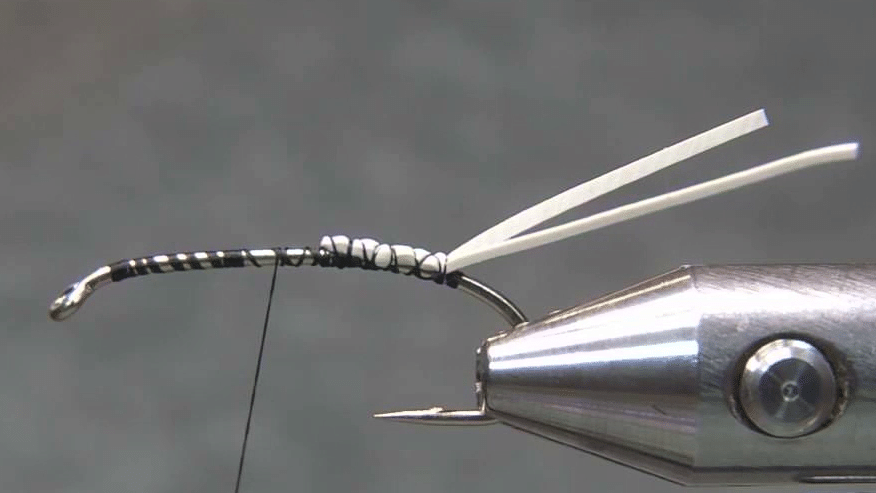
- Tie in a single rubber leg on top of the hook to form the tail.
- Wrap the thread back to the bend and trim the tail to length.
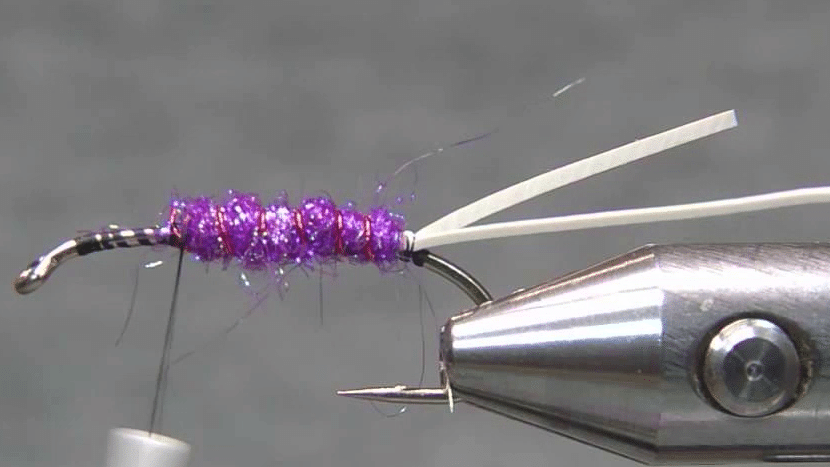
- Tie in the copper wire for the rib.
- Dub the body from the rear to just beyond the halfway point, tapering it thicker towards the front.
- Wrap the copper wire forward in evenly spaced turns and tie it off.
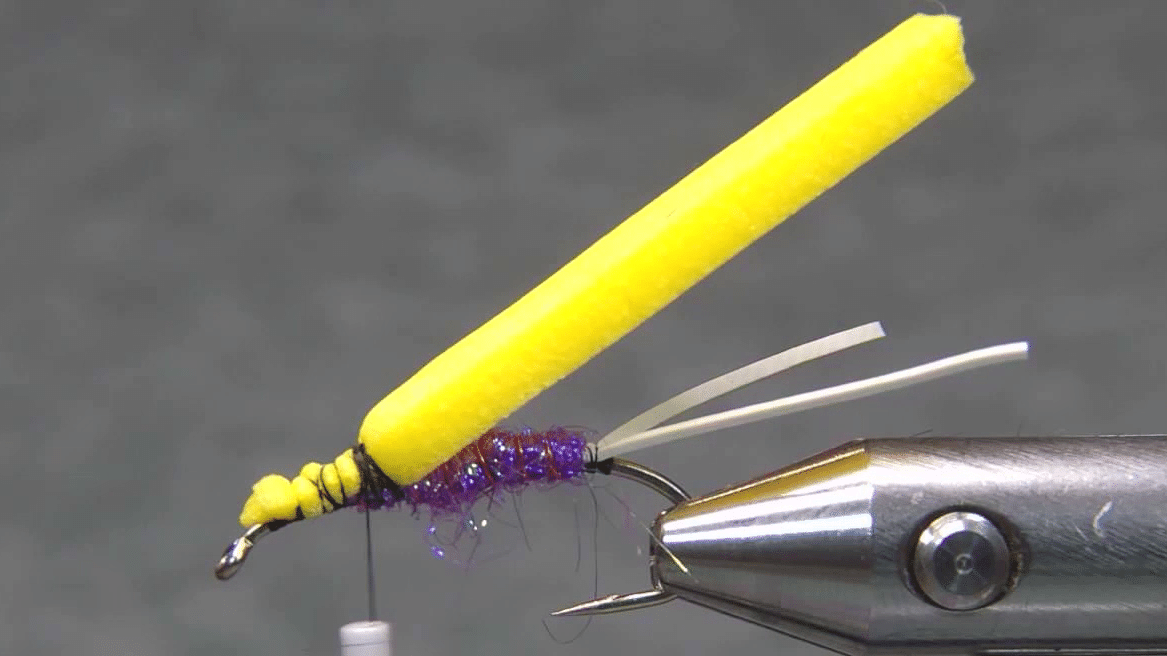
- Tie in the yellow striped foam strip to form the main wing.
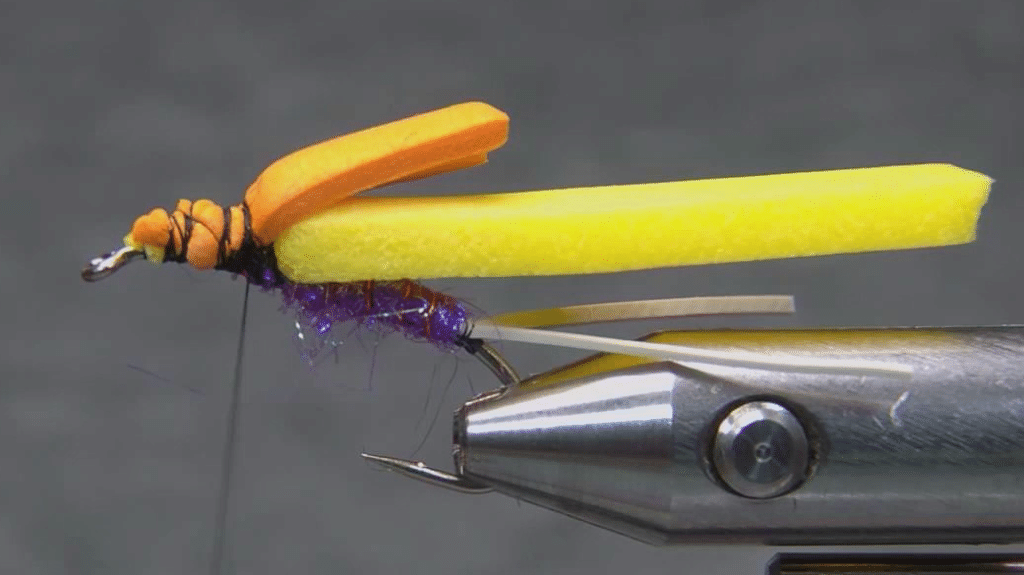
- Tie in the orange foam strip to add extra flotation.
- Trim the front of the foam to length.
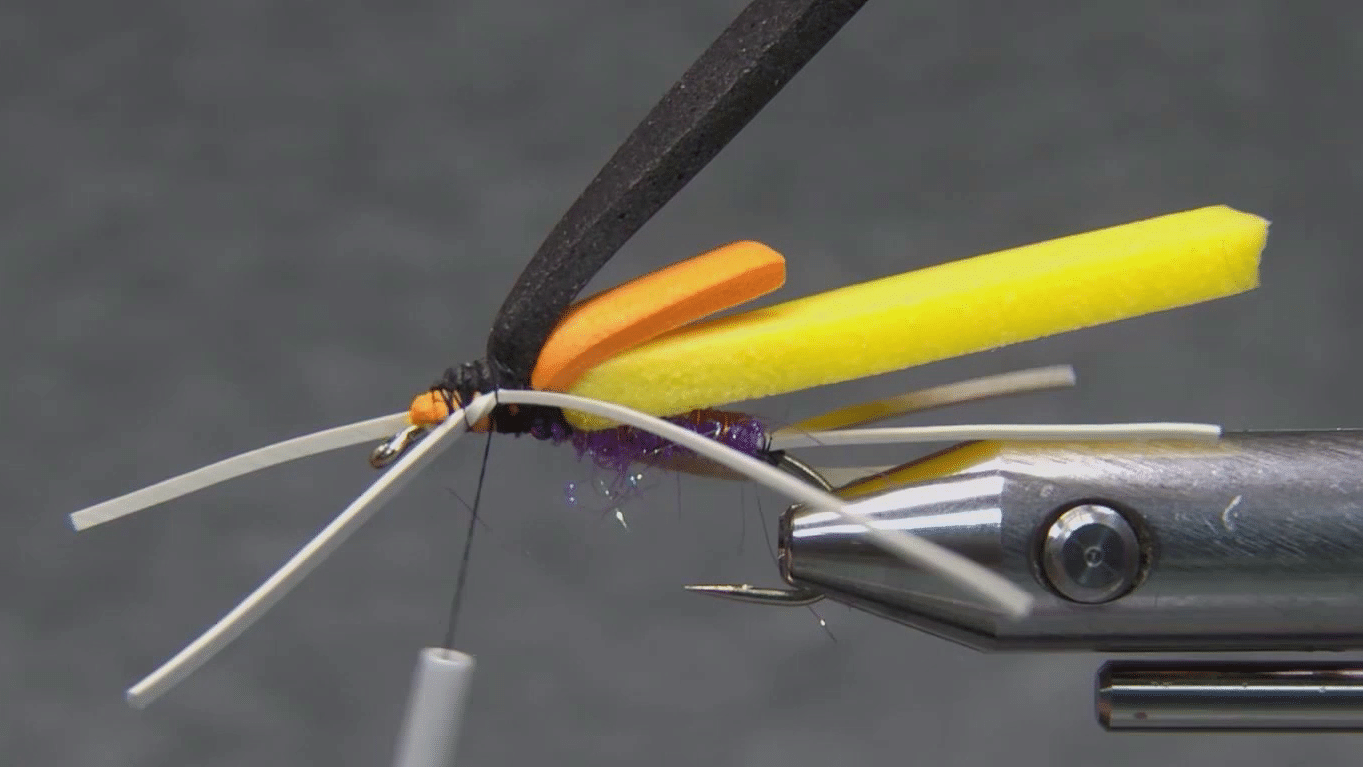
- Tie in the black foam strip to form the wing case.
- Tie in a white rubber leg on each side of the fly.
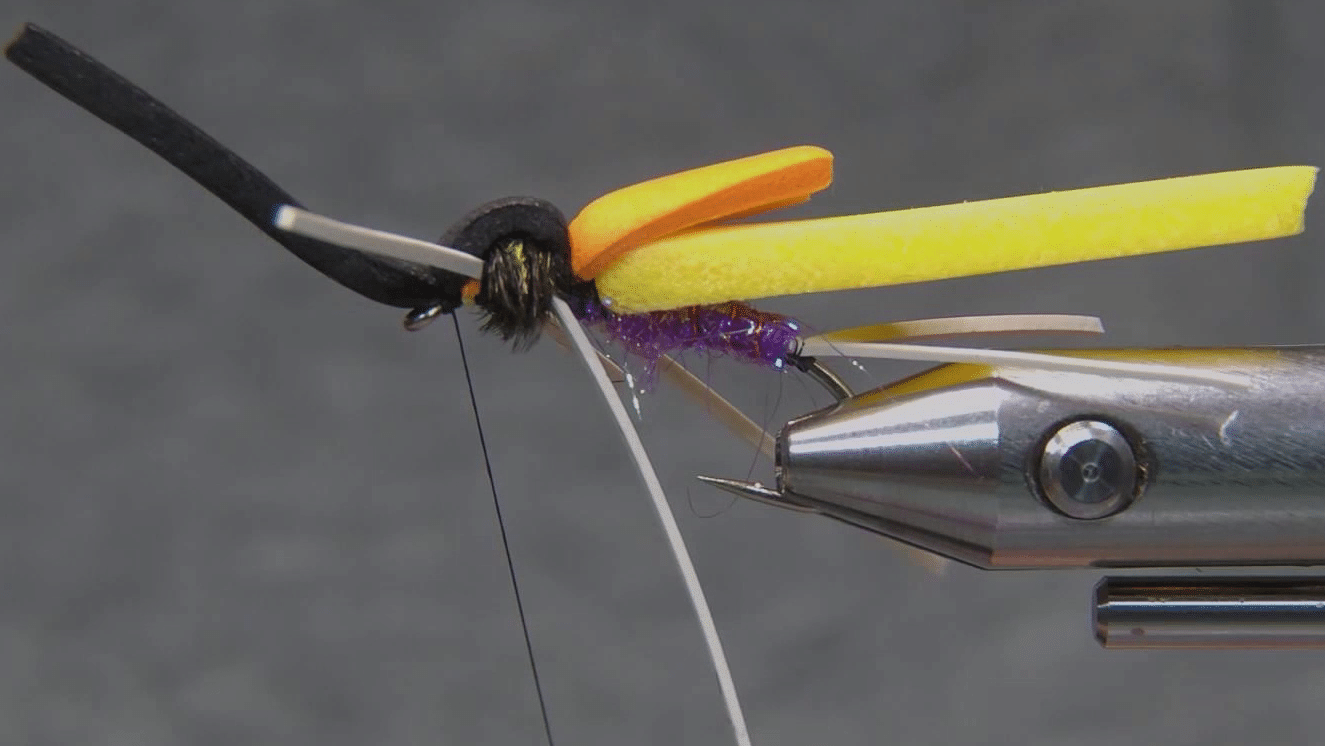
- Tie in the peacock herl and wrap a compact, tight thorax.
- Fold the black foam forward over the thorax and tie it off to form the wing case.
- Whip finish and secure the thread.
- Trim the foam and rubber legs to the desired length.