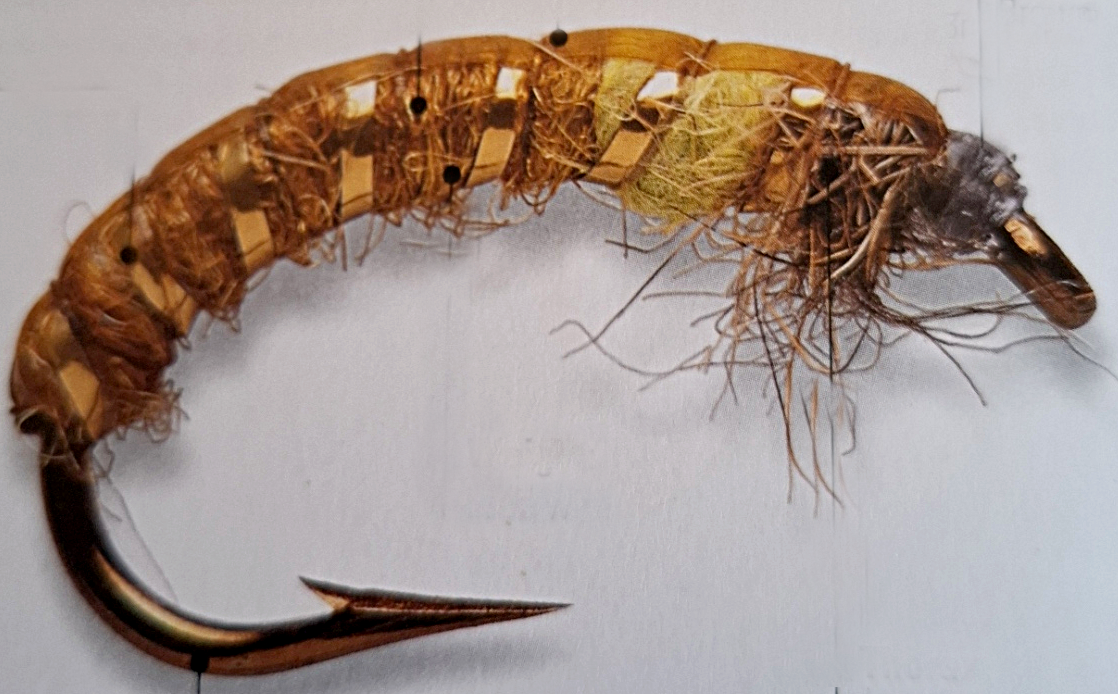

The Czech Nymph may be tied in a range of colours, with brown and green being the most effective.
The shellback consists of a thin, flexible plastic strip, a product marketed under brand names such as Body Stretch and Scud Back.
Body colour varies from black, olive and fiery brown to red and orange.
With the basic profile of a caseless caddis larva, the Czech Nymph is extremely effective when trout and greyling are feeding hard on the riverbed.
Developed by Czech anglers, the combination of heavy hook and lead underbelly ensures that the pattern sinks extremely quickly, making it ideal for fishing in deep or fast-moving water.

Materials
Source: The Fly-tying Bible (pages 134-135)
Alternative
Source: Hatches Magazine
Tying Instructions
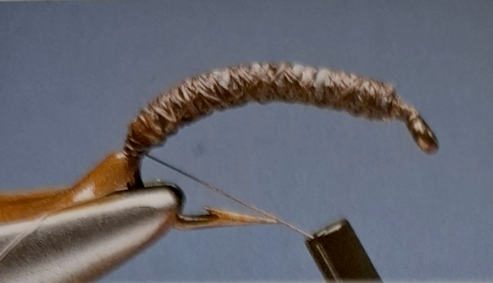
- Fix the hook in the vice. Wind on close turns of medium-width lead-free wire to halfway around the bend, and secure with thread. At the rear of the underbody, catch in 7.5cm (3 inches) of clear nylon monofilament and a length of brown plastic strip.
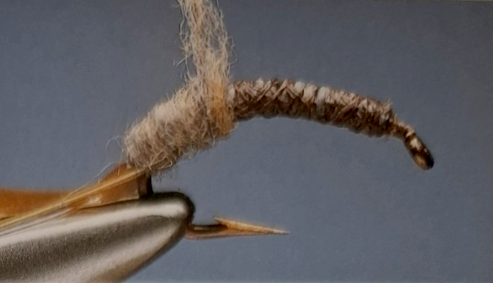
- Catch in 5cm (2 inches) of fine, flat, gold tinsel, then take a good pinch of tan fur and dub it thickly onto the tying thread. Wind the dubbed fur over the lead underbody, stopping halfway along.
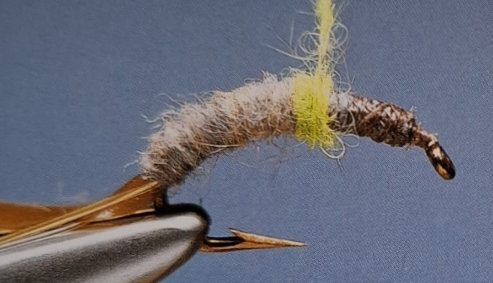
- Dub a small pinch of green fur onto the thread and wind it on to the form a sort, bright section in the body.
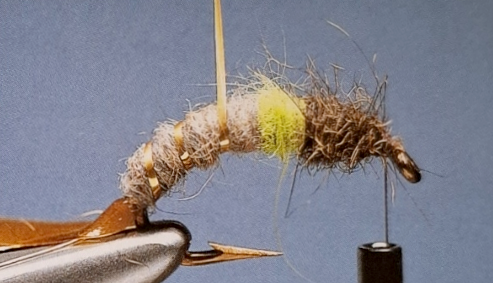
- Dub a good pinch of hare’s fur and wind it up to the eye. Take hold of the flat, gold tinsel and wind it along the body in evenly spaced turns.
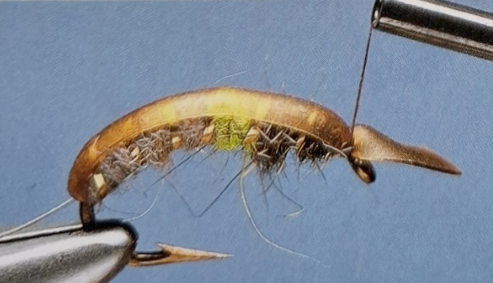
- Secure the loose end of tinsel at the eye and remove it. Draw the plastic strip over the top of the body and secure it at the eye with tying thread.
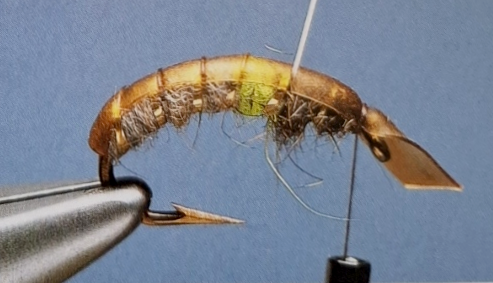
- Use the nylon monofilament as a rib, winding it over the body and the plastic shellback to lock it in place and suggest segmentation. Secure at the eye and remove the excess monofilament and plastic. Build a neat head before casting off.