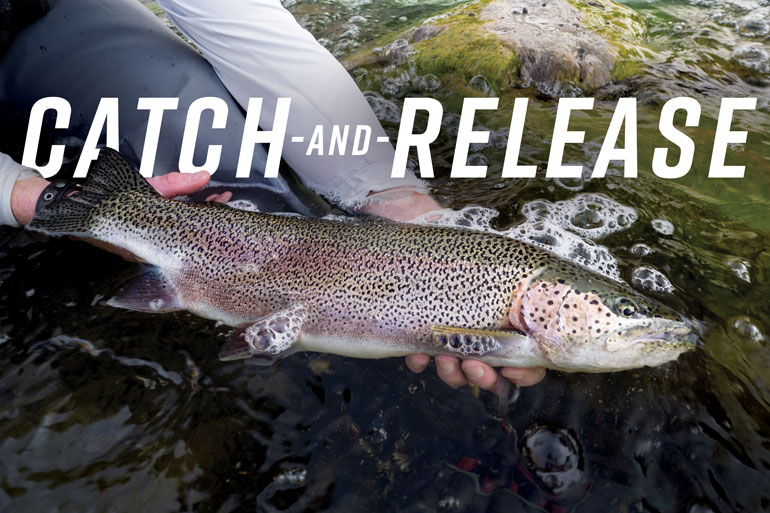
At Hastings Fly Fishers, we pride ourselves on being a catch and release club, practising responsible fishing and returning most fish to the water whenever circumstances allow.
A successful release is about more than simply putting a fish back in the water. How we hook, land, handle and release a fish can make a significant difference to its chances of survival.
Whether you’re fishing in freshwater or saltwater, here are a few simple tips to help give your catch the best possible chance of swimming away healthy.
Before you start fishing
Use suitable tackle. Choose tackle appropriate for the species you’re targeting. Fishing with gear that’s too light can unnecessarily exhaust a fish and increase the time needed to land it.
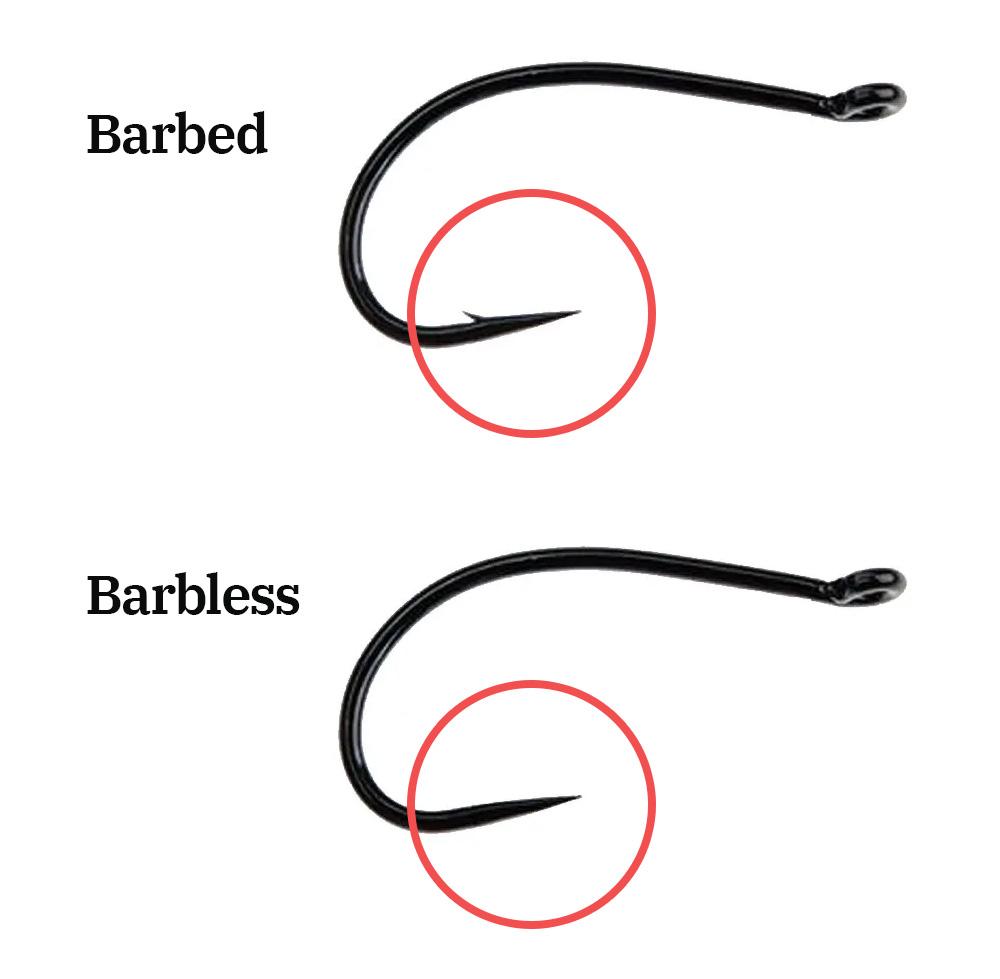
Use barbless hooks. Barbless hooks, or hooks with the barbs crimped down, make releasing fish easier and reduce handling time. Larger barbs can be filed down if necessary.
Be prepared. Have your pliers or hook-removal tool, landing net and other equipment readily accessible so you can deal with a fish quickly.
Landing and handling your catch
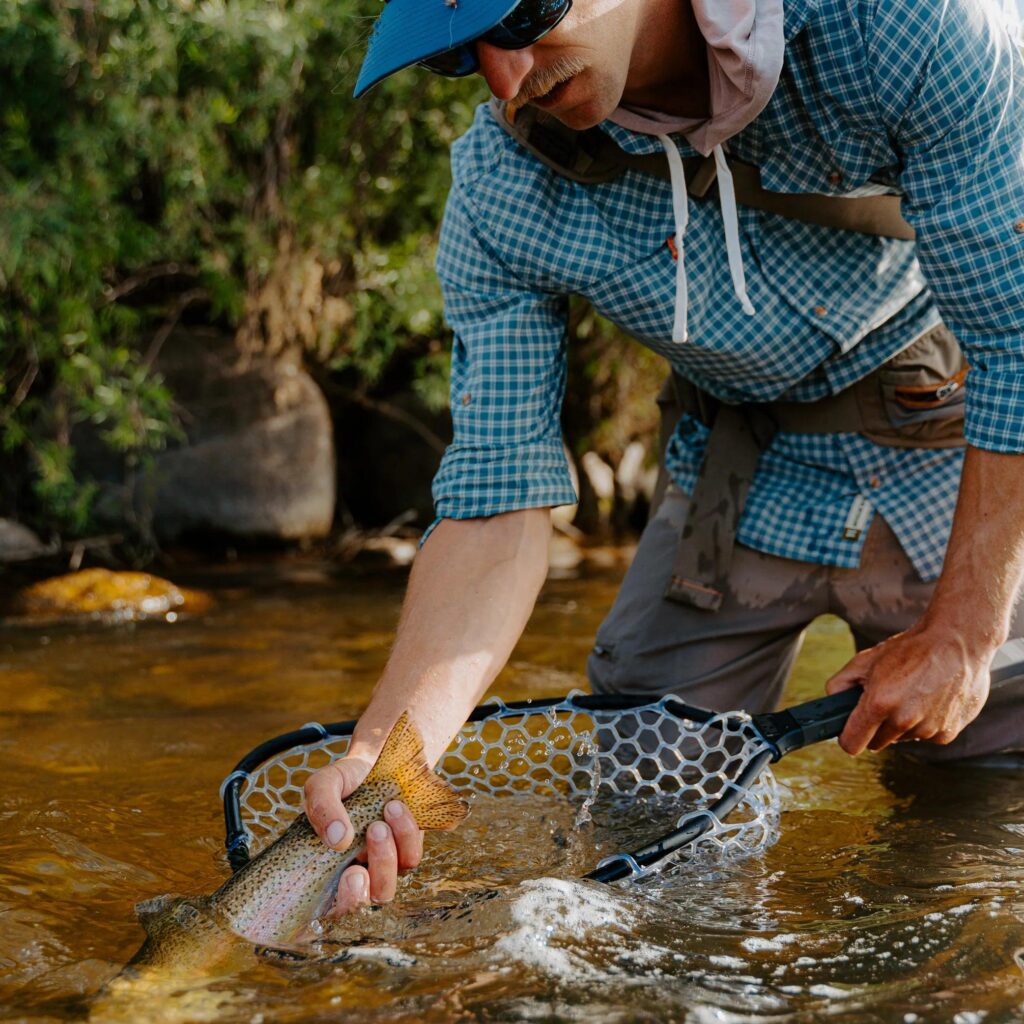
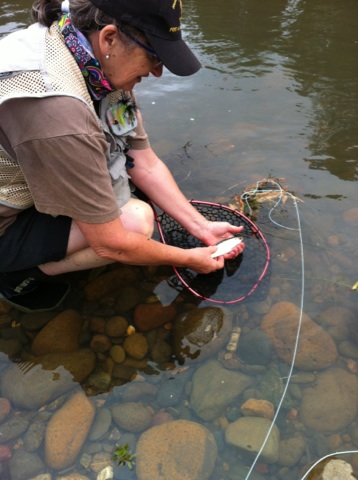
Use a fish-friendly landing net. Where possible, use a net with soft, knotless mesh to minimise damage to the fish’s scales, skin and fins.
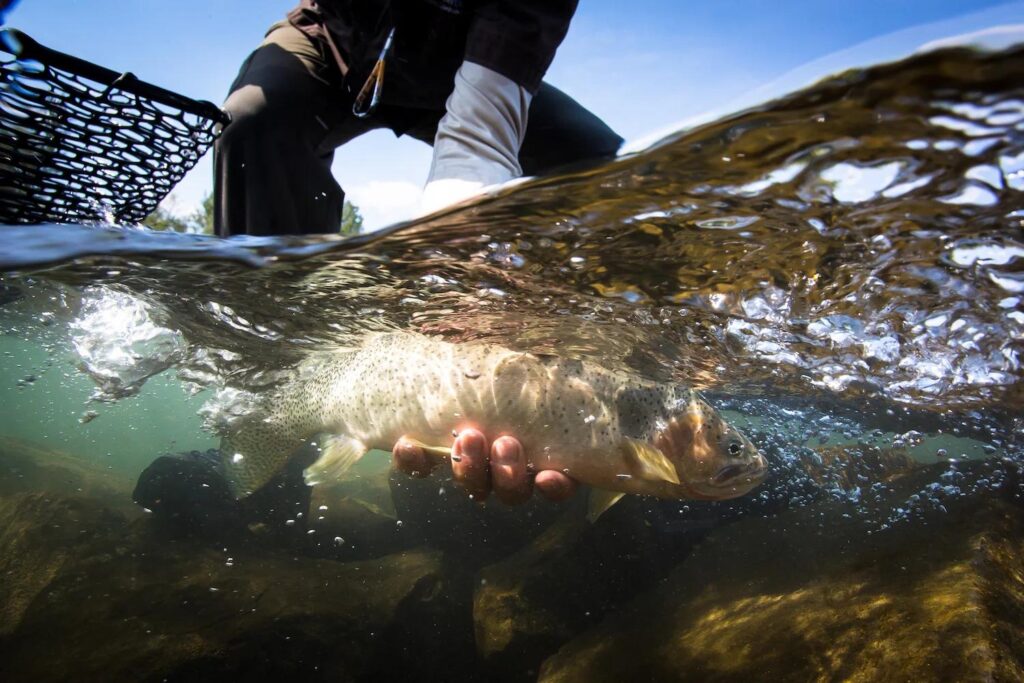
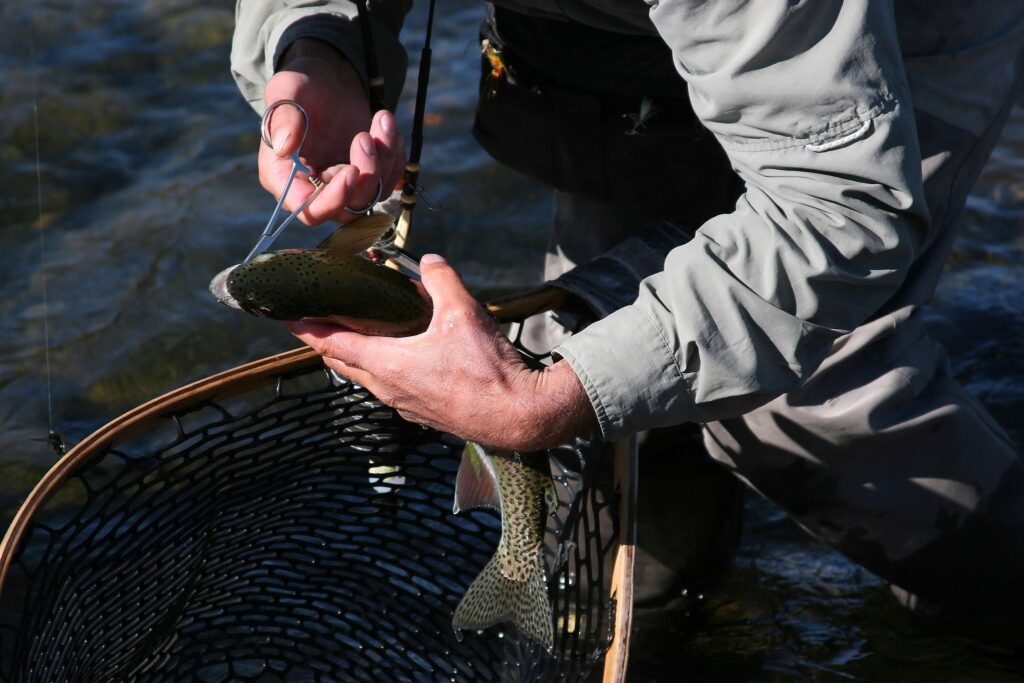
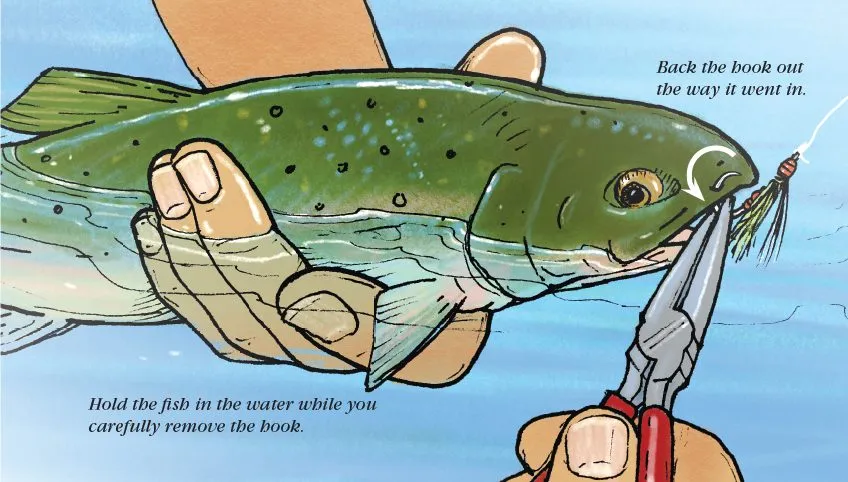
Keep the fish in the water. Ideally, remove the hook while the fish is still in the water. If you need to lift it out, keep the time out of the water to an absolute minimum.
Remove mouth hooks promptly. If a fish is hooked in the mouth, carefully remove the hook using suitable pliers or a hook-removal tool.
Leave deeply embedded hooks alone. If a fish is gut-hooked or the hook is deeply embedded in its throat or gills, cut the line as close to the mouth as possible rather than attempting to remove the hook. Research has shown that this can significantly improve survival rates.
Keep your hands wet. Always wet your hands before handling a fish. Wet gloves are another option. A fish has a protective mucous coating (often called its slime layer), which helps protect it against infection and disease. Handling fish with dry hands can damage this important protective barrier.
Avoid the gills and eyes. Never hold a fish by its gills or insert fingers into its gill openings. Avoid unnecessary contact with the eyes, and support the fish’s body properly when lifting it.
Be careful with photographs. If you want a photo of your catch, have your camera ready beforehand. Support the fish horizontally and return it to the water as quickly as possible.
Releasing your catch
Don’t simply throw the fish back. Return it gently to the water, preferably in the same area where it was caught.
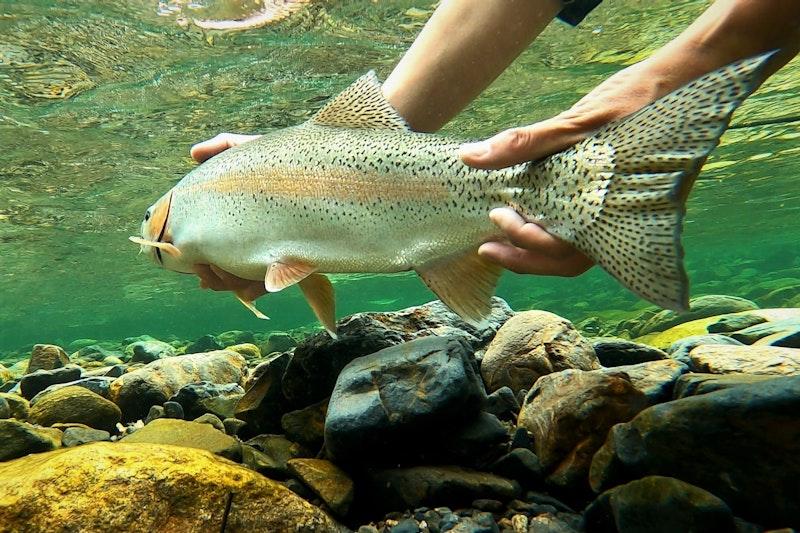
Revive exhausted fish. If a fish appears tired or struggles to remain upright, hold it gently in the water, facing into the current. This allows water to flow over its gills. In still water, gently move the fish forwards through the water to encourage water flow over the gills.
Give it time. Wait until the fish regains its balance and begins swimming under its own power before letting go.
Why does it matter?
Being caught is a stressful experience for a fish. Exhaustion, physical injuries, prolonged handling and exposure to air can all reduce its chances of survival.
Damage to the protective slime coating can leave fish more susceptible to infection and disease. Fish released while still exhausted may also be more vulnerable to predators, particularly in saltwater environments.
The aim is to minimise stress and handling, and return the fish to the water in the best possible condition.
A note about barbless hooks
Contrary to popular belief, fish don’t necessarily escape more easily when caught on barbless hooks. Provided you maintain tension on the line and play the fish correctly, they are unlikely to throw the hook. The benefits of easier hook removal and less damage generally make barbless hooks a worthwhile choice.
Ultimately, catch and release is about giving the fish every reasonable opportunity to survive and continue contributing to our fisheries.
Look after the fish, look after the water, and enjoy your fishing!
Further reading
For more detailed information on responsible fishing and catch and release techniques, these resources are worth a look: