
Australia is home to a remarkable variety of small native freshwater fish, many of which go largely unnoticed. Among them are the galaxias, a family of fish found throughout southern Australia and other parts of the Southern Hemisphere. Some are widespread and relatively common, while others have become so rare that they now face the very real threat of extinction.
Two species illustrate this contrast particularly well: the Common Galaxias (Galaxias maculatus), a widespread inhabitant of coastal rivers and estuaries, and the Shaw Galaxias (Galaxias gunaikurnai), a tiny Victorian freshwater fish classified as Critically Endangered.
Australia is home to a remarkable variety of small native freshwater fish, many of which go largely unnoticed. Among them are the galaxias, a family of fish found throughout southern Australia and other parts of the Southern Hemisphere. Some are widespread and relatively common, while others have become so rare that they now face the very real threat of extinction.
Two species illustrate this contrast particularly well: the Common Galaxias (Galaxias maculatus), a widespread inhabitant of coastal rivers and estuaries, and the Shaw Galaxias (Galaxias gunaikurnai), a tiny Victorian freshwater fish classified as Critically Endangered.
Australia’s Native Galaxias
Galaxias belong to the family Galaxiidae, an ancient group of freshwater fish predominantly found in the Southern Hemisphere. They are generally small, slender-bodied fish, often with rounded or slightly flattened heads, relatively large eyes and fins positioned towards the rear of the body.
Their colouring varies considerably between species, ranging from olive-green and brown to silvery or golden shades, often with distinctive spots, blotches or dark markings.
Galaxias occupy a variety of freshwater habitats, including rivers, streams, lakes, wetlands and alpine creeks. Some species spend their entire lives in freshwater, while others migrate between freshwater and the sea as part of their life cycle.
Despite their small size, these fish play an important role in aquatic ecosystems. They feed on aquatic and terrestrial insects, crustaceans and other small invertebrates, while also providing food for larger native fish, birds and other predators.
Common Galaxias (Galaxias maculatus)
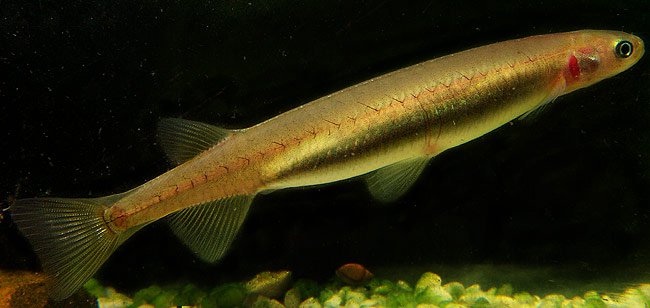
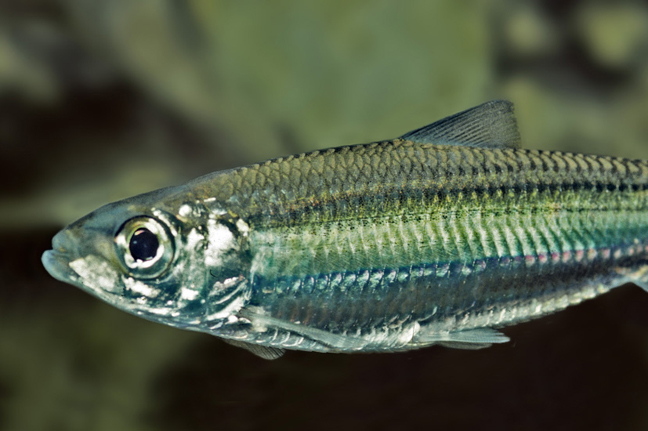
The Common Galaxias, also known as the Common Jollytail, is one of Australia’s most widespread native freshwater fish. It occurs in coastal rivers, streams and lakes from southern Queensland through New South Wales, Victoria and Tasmania, extending into parts of South Australia and Western Australia.
Physical Characteristics
Usually growing to around 10 cm, although individuals can reach approximately 19 cm, the Common Galaxias has an elongated body, a slightly forked tail and dorsal and anal fins positioned opposite one another towards the rear of the body. Its colour ranges from green to amber, with varying patterns of dark spots and blotches along its sides.
Habitat and Behaviour
It prefers still or slow-flowing water, including streams, rivers and lakes, and can tolerate considerable changes in salinity. Its diet consists mainly of aquatic and terrestrial insects and small crustaceans.
An Unusual Lifestyle
One of the most interesting features of the Common Galaxias is its migratory life cycle.
In coastal populations, adult fish move downstream towards estuaries during autumn to spawn. Eggs are deposited among vegetation along the margins of estuaries, often around spring tides. As the water level falls, the eggs can remain exposed to the air for several days while developing.
When the next suitable high tide arrives, newly hatched larvae are carried out to sea, where they spend approximately five to six months developing before returning to freshwater as small juveniles, commonly known as whitebait.
They then migrate upstream to occupy suitable freshwater habitats and eventually mature.
This remarkable migration between freshwater, estuarine and marine environments makes the Common Galaxias an important link between these ecosystems.

Shaw Galaxias (Galaxias gunaikurnai)

At the opposite end of the conservation spectrum is the Shaw Galaxias, a small and extremely rare freshwater fish found in Victoria’s Gippsland region.
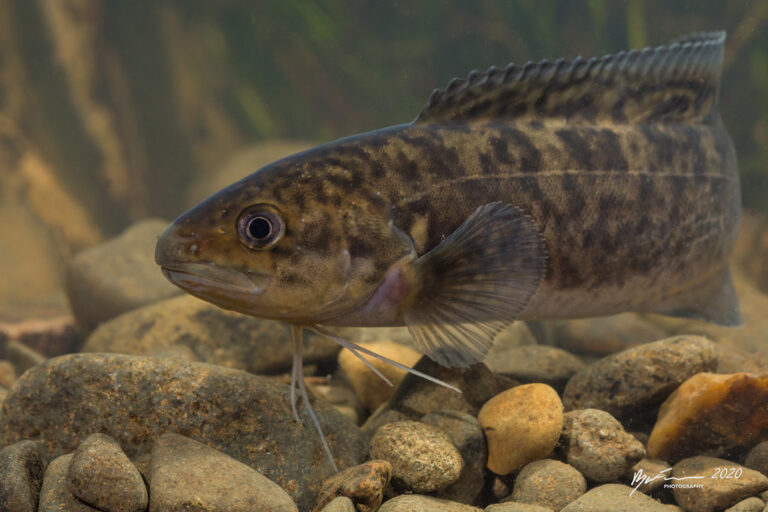
Growing to only around 10 cm, it has a relatively stout body with distinctive dark brown markings and bands across its sides, sometimes forming a pattern resembling tiger stripes. Its fins are translucent, and it has a characteristic golden patch near the gill covers.
The species is named after Shaw Creek, where it was first identified. Its known natural distribution is restricted to a small section of the creek’s headwaters in the Alpine National Park, within the Macalister River catchment.
Unlike the Common Galaxias, which can migrate between freshwater and the sea, the Shaw Galaxias is a non-migratory freshwater species that depends on its small, isolated stream habitat.
Why is the Shaw Galaxias endangered?
The Shaw Galaxias is particularly vulnerable to introduced predatory fish, especially Brown Trout (Salmo trutta).
Brown Trout were introduced to Australian waterways for recreational fishing and have become established in many rivers and streams. They readily prey on small native fish, including galaxias, and can eliminate entire populations where the two species overlap.
The Shaw Galaxias survives in a small section of stream protected by an in-stream barrier that restricts the upstream movement of trout. Without this protection, the species would be at considerable risk of predation.
Its extremely restricted distribution also makes it vulnerable to environmental events. Bushfires, drought, floods, sedimentation and changes in water quality can all threaten its remaining habitat. A single severe event could have devastating consequences for such a small population.
The species is listed as Critically Endangered, reflecting its extremely limited distribution and the continuing threats to its survival.
Conservation – Protecting Australia’s Galaxias
The plight of the Shaw Galaxias is part of a much wider conservation issue affecting Australia’s native freshwater fish.
Many galaxias species have suffered significant declines as a result of introduced predatory fish, habitat degradation and changing environmental conditions. Some are now restricted to isolated headwater streams, where natural barriers such as waterfalls provide a refuge from introduced trout.
Conservation efforts include:
Researchers and conservation agencies are working to better understand these species and develop practical ways to protect them. However, the survival of many threatened galaxias remains precarious.
Yalmy Galaxias (Galaxias sp. nov. ‘Yalmy’)
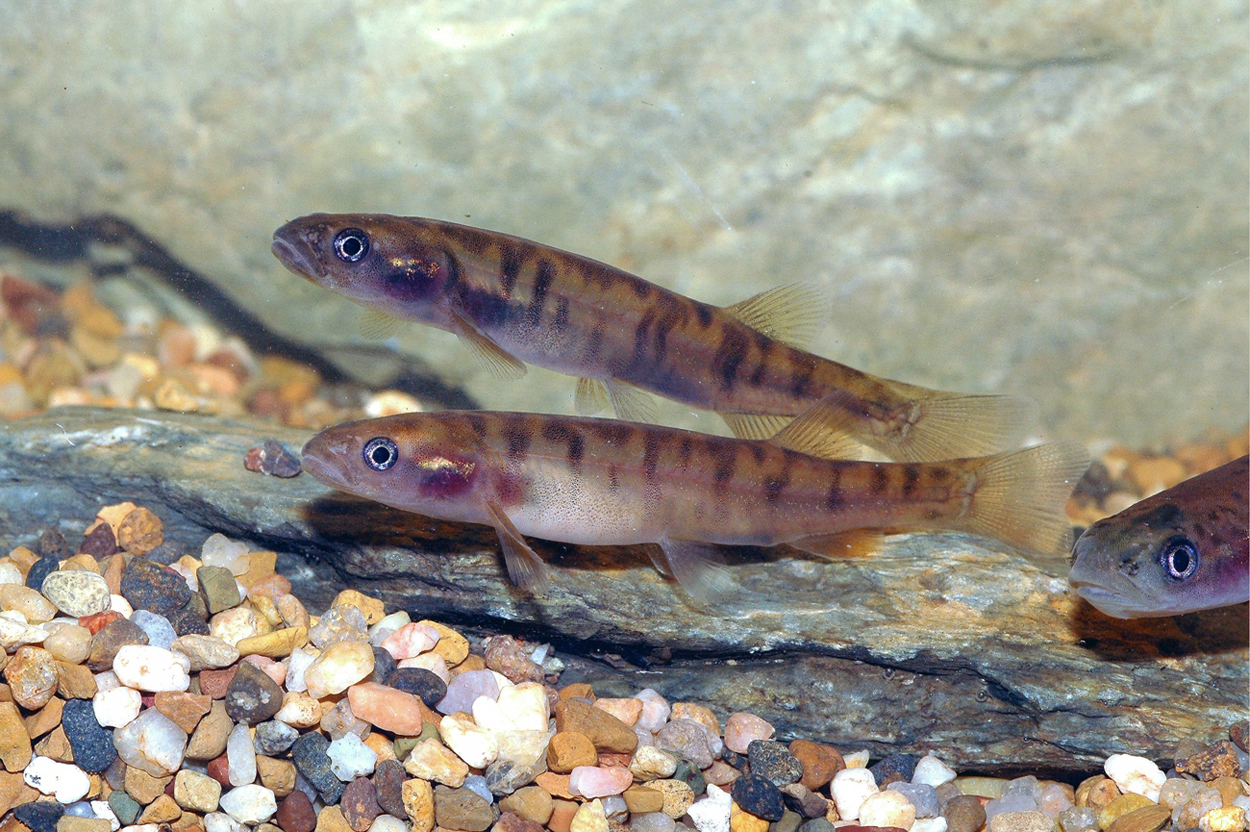
The Yalmy Galaxias is a little-known Australian native freshwater fish found in a restricted area of East Gippsland, Victoria. It is recognised as a distinct species within the Galaxias genus, although it has not yet been formally described and named.
With an extremely limited distribution and a population severely affected by environmental disturbances, the Yalmy Galaxias is classified as Critically Endangered under both Australian and Victorian threatened species legislation.
Physical Characteristics
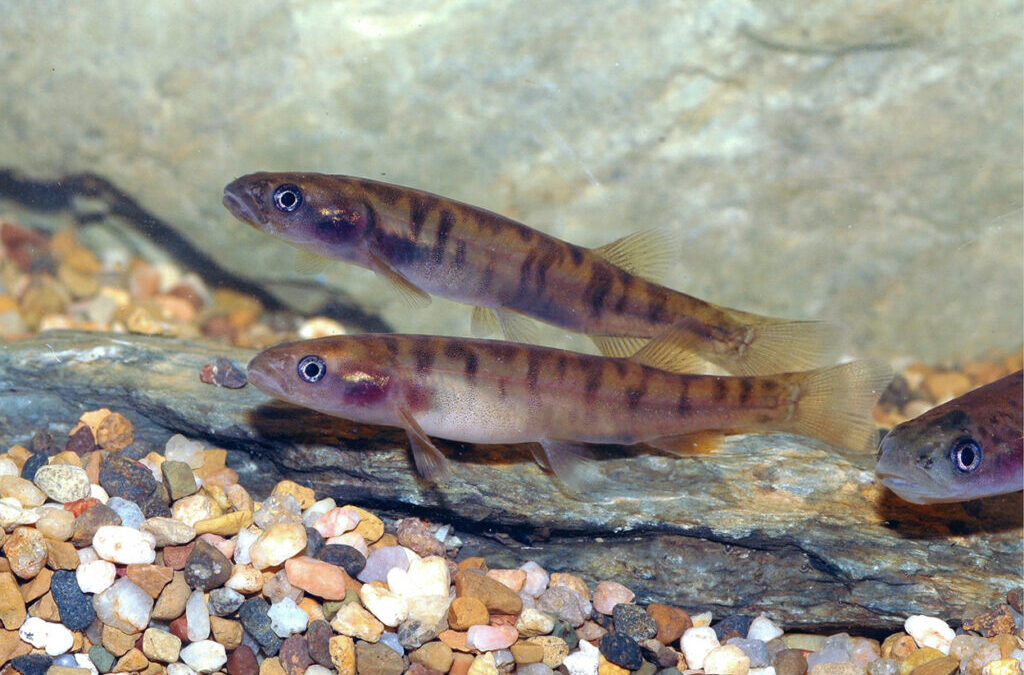
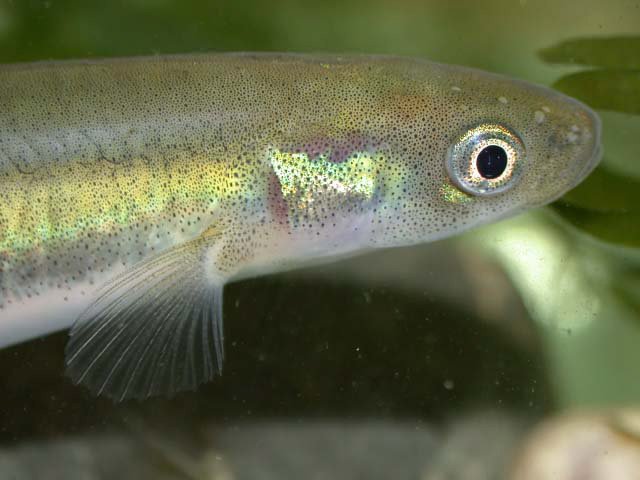
The Yalmy Galaxias is a small, slender freshwater fish, reaching approximately 8 cm in length. It has no scales and is generally orange-brown in colour, with distinctive darker brown to charcoal markings and bands across its back and sides.
Other identifying features include relatively large eyes, translucent fins and a distinctive head shape with thick, fleshy lips. It is closely related to other members of the Galaxias olidus species complex, including Mountain Galaxias and McDowall’s Galaxias.
Habitat and Threats
The Yalmy Galaxias is known from a very restricted section of the Yalmy River, Serpentine Creek and the lower Rodger River in East Gippsland. Its known distribution covers approximately nine kilometres of stream within the Snowy River catchment, partly inside Snowy River National Park.
It inhabits small, shallow, clear-flowing streams in forested catchments, favouring partly shaded areas with rocky, cobbled stream beds and fast-flowing water. Adults are often found resting among the rocks on the stream bed, while younger fish may swim higher in the water column.
The species faces several serious threats:
The combination of these threats is particularly serious because the species occupies such a small and isolated range.
Conservation Efforts
The species faces several serious threats:
- Introduced trout: Brown Trout and potentially Rainbow Trout prey on native galaxias. The Yalmy Galaxias does not persist in areas where trout become established.
- Bushfires and sedimentation: The 2019–20 bushfires affected much of its known distribution. Subsequent heavy rainfall washed ash, debris and sediment into waterways, smothering important habitat and reducing suitable flowing-water refuges.
- Drought and climate change: Reduced stream flows, rising water temperatures and more frequent extreme weather events threaten the availability of suitable habitat.
- Habitat degradation: Damage to streamside vegetation, erosion, introduced deer and other disturbances can further reduce water quality and habitat suitability.
The combination of these threats is particularly serious because the species occupies such a small and isolated range.
Why These Little Fish Matter
It is easy to overlook small native fish when much of the attention surrounding Australian freshwater fishing is focused on larger species such as Murray Cod, Australian Bass and Golden Perch.
However, galaxias are an important part of Australia’s freshwater biodiversity. They contribute to healthy aquatic ecosystems, provide food for other wildlife and represent a unique part of our natural heritage.
The contrast between the widespread Common Galaxias and the critically endangered Shaw Galaxias is a reminder that even small and easily overlooked species can face enormous conservation challenges.
Protecting our native waterways means protecting all the fish that depend on them, not just the species that are popular with anglers.