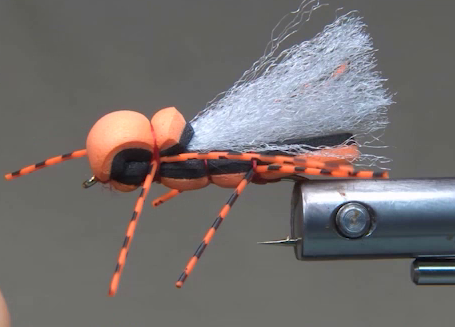
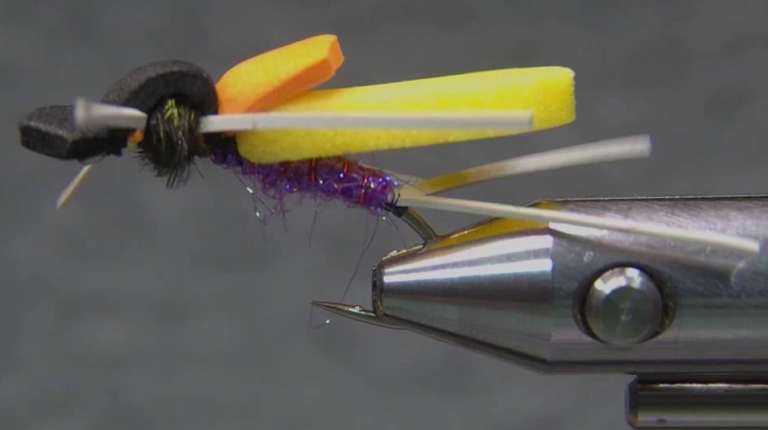
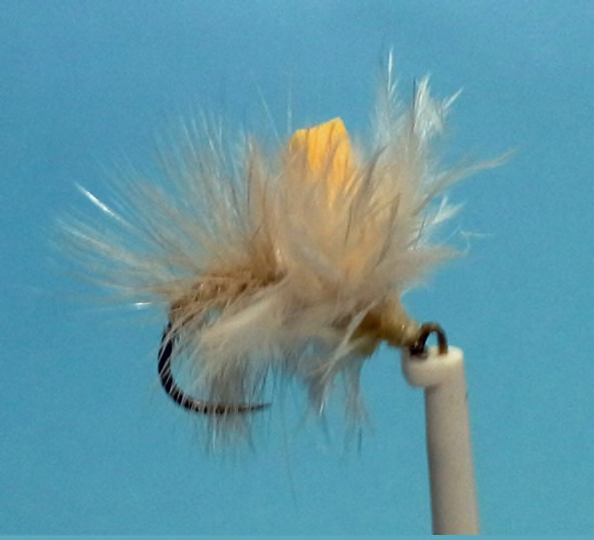
The Flipper fly was first tied in South Africa and is effectively a top-water fly or a popper. It imitates a wounded baitfish struggling on the surface. It is often used as an attractor with a smaller fritz or small clouser minnow fly behind it. This method works very well, especially when targeting Garrick or Kingfish.
This fly popper can be fished on the surface or slightly underwater, with an aggressive and erratic retrieve.
It can be tied in different patterns and various ways. The Flipper works similar to that of a popper and can be fished along drop offs, sand banks and structure, but if there is a feeding frenzy, cast this fly just behind all the action and start retrieving it.
Materials
Alternative
Source: Complete Fly Fisherman
Tying Instructions
Step 1
Cover the hook shank with thread and tie in the bucktail at the bend of the hook with a pinch loop.
Top the bucktail with 6 strands of flashabou, extending slightly past the bucktail tips.
Top the flashabou with more bucktail, this ensures the limper flash doesn’t foul while casting.
Cut a piece of foam 1.5 times the hook shank length and approximately 1/3 of the shank length wide.
Cut a “V” in the one end, which will accommodate the tail of the fly.
Step 2
Tie in the foam on top of the shank, positioned with the “V” extending over the tail.
Apply Sally Hansen or head cement to the thread and secure the foam with 4 more firm thread wraps. Secure with a half hitch.
Step 3
Tie in the Crystal chenille in front of the foam, apply head cement to the hook shank, this will make for a more durable fly.
Step 4
Wrap the chenille forward, stroking the fibres back after each turn, tie off and trim the tag.
Take the foam over the top of the body and secure with thread wraps (apply head cement to the thread). Whip finish.
Step 5
Colour the gill area with a red marker pen or alternatively tie in red Flouro Fibre.
Attach dollâ’s eyes with super glue (gel type) or Bostik Clear glue.