

Why Elk Hair Works Well
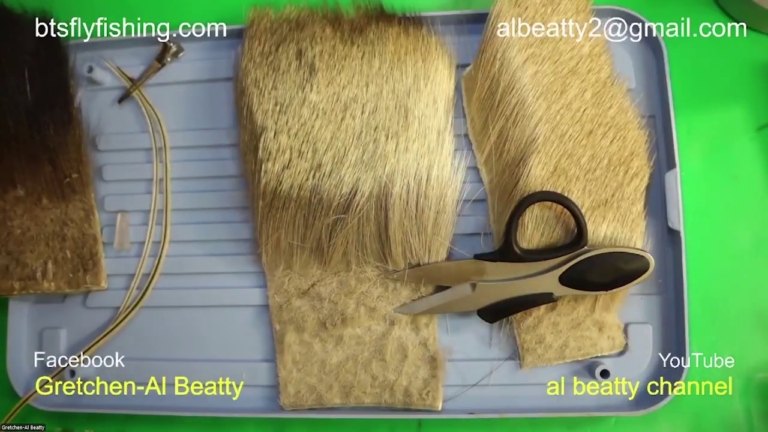
In this demonstration – taken from Al Beatty’s Fly Tying Friday, 24 April 2026 – Al Beatty explains that elk hair is often easier to handle than deer hair. It is stiffer, which can make placement harder at first. That same stiffness also gives tiers more control and helps create buoyant, durable dry flies.
Preparing the Hair
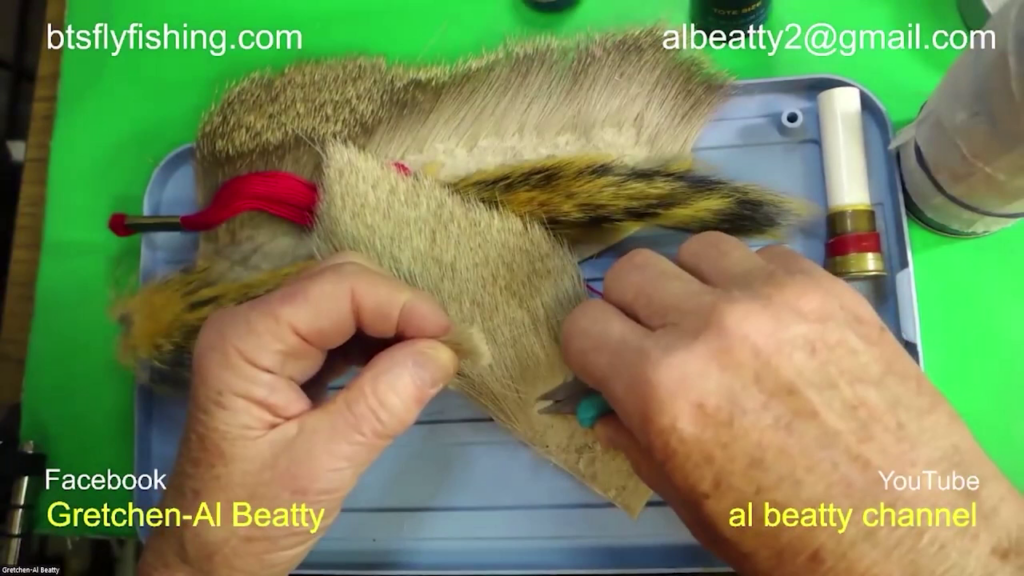
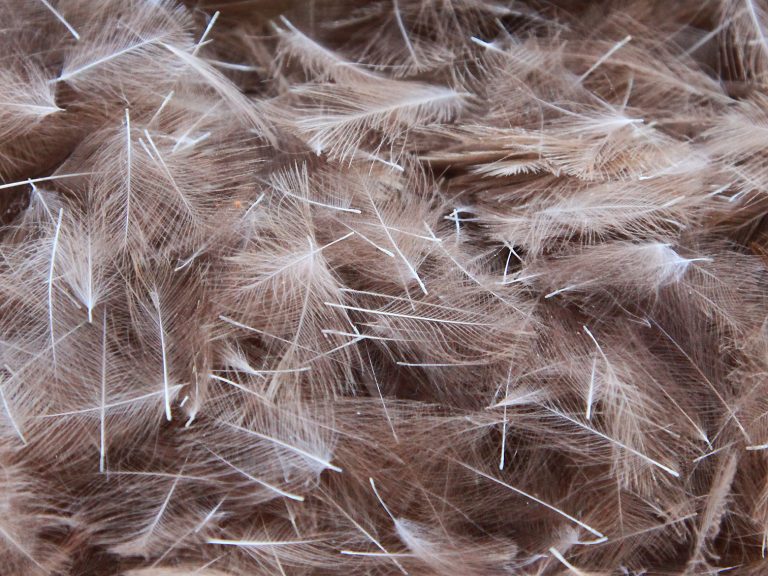
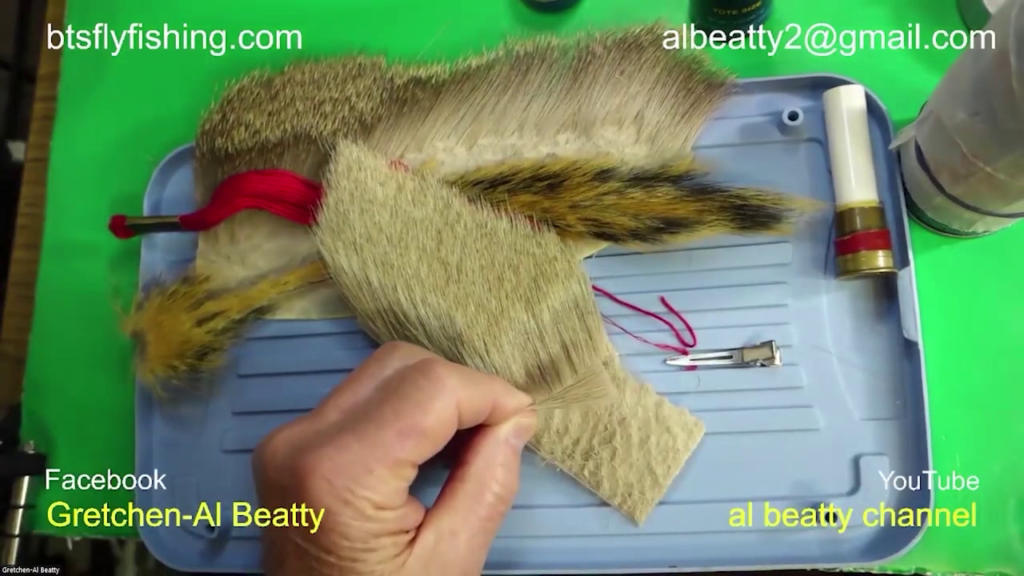
Beatty starts by cutting a tight clump of elk hair close to the hide. This method avoids leaving short stubble behind and saves more usable hair. He then combs through the base ends with his fingers. This removes loose fibres and underfur. Beatty stresses the importance of removing the short, immature fibres. These fibres compress differently from mature hair. They can cause uneven flare and make spinning more difficult.
Stacking and Measuring
Next, he places the cleaned bundle into a hair stacker to align the tips. After stacking, he grips the butt ends and removes any loose material that remains.
He then measures the clump to the correct length before tying it in.
Spinning the Hair
When tying the hair to the hook, Beatty increases thread pressure gradually. He does not cinch the thread down in one hard pull.
He first tightens the thread to about “80 percent.” This allows the hair to flare and rotate naturally around the hook. If the bundle does not spread evenly, he uses a thumbnail to move the hair into place. Small adjustments quickly fix gaps or heavy spots.
Building the Body
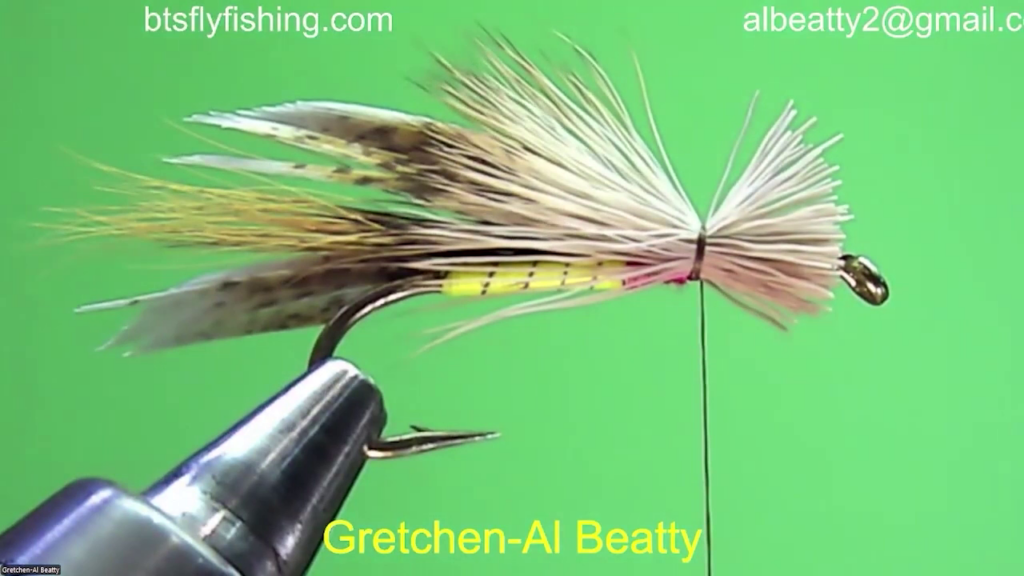
Once the hair sits correctly, he tightens the thread fully. He then works through the butt ends toward the front of the fly. He repeats the process with more clumps until the hook shank is covered.
Key Lesson
Beatty’s message is simple. Clean the hair well, tighten the thread in stages, and adjust the spin by hand when needed. Careful preparation and controlled pressure create neater, better-balanced spun hair flies.