Australia is home to two species of threadfin salmon: the Blue Threadfin (Eleutheronema tetradactylum) and the King Threadfin (Polydactylus macrochir), also commonly known as Blue Salmon and King Salmon, respectively.
Both are fast-growing, predatory fish that feed on small baitfish, prawns and other crustaceans. They inhabit tropical and subtropical coastal waters, with their Australian distribution extending from the Brisbane region northwards along the east coast and around northern Australia, reaching down the Western Australian coastline.Identifying Threadfin Salmon
Identifying Threadfin Salmon
Both species belong to the family Polynemidae, a group of fish well adapted to feeding in muddy and often turbid waters.
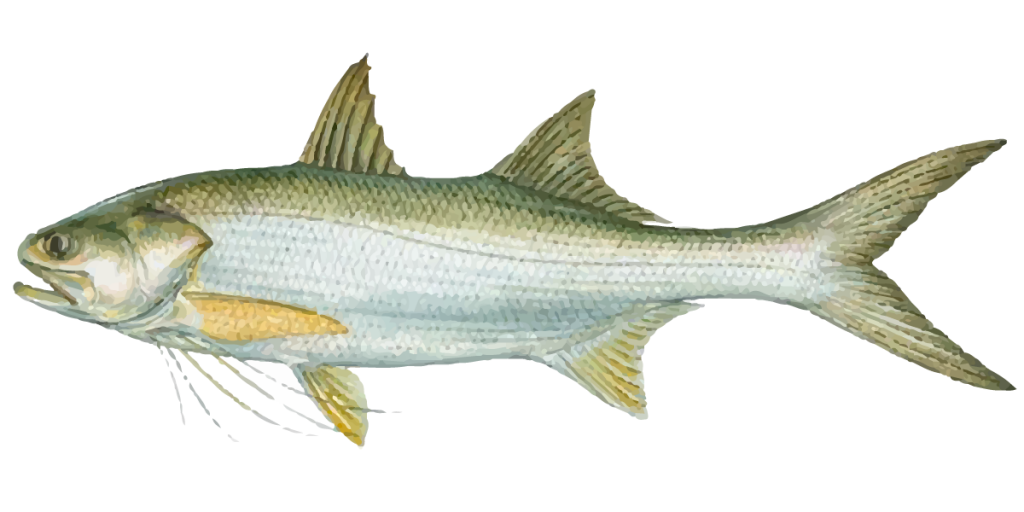
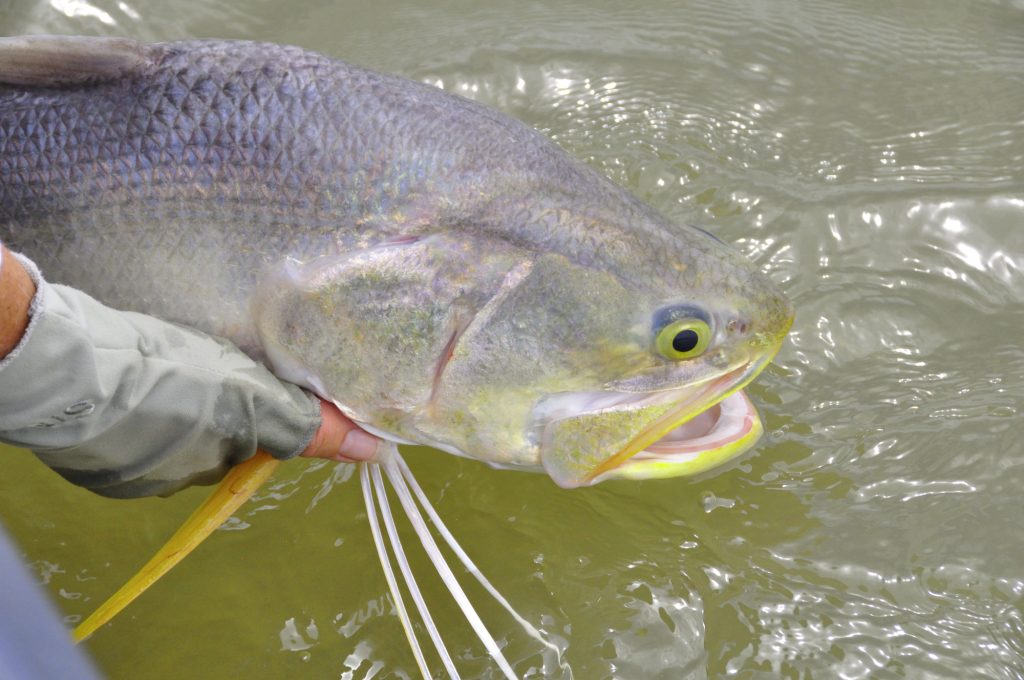
Their most distinctive feature is the collection of long, thread-like sensory filaments extending from the base of each pectoral fin. These specialised filaments help them locate prey in murky water, where visibility is limited, and are the origin of the common name ‘threadfin’.
Other identifying features include:
Although similar in appearance, the two species differ considerably in their potential size and lifespan.
Blue Threadfin and King Threadfin
Blue Threadfin – Eleutheronema tetradactylum

Blue Threadfin generally live for around eight years and can grow to approximately 100 cm in length.
King Threadfin – Polydactylus macrochir
King Threadfin grow considerably larger and live longer. They can reach approximately 170 cm in length, with a maximum published weight of around 45 kg and a lifespan of up to 22 years.
Habitat and Feeding Behaviour
Although tolerant of changes in salinity, Threadfin Salmon are essentially marine fish. They are commonly found around river mouths, estuaries and other inshore habitats, often moving into the upper tidal reaches of rivers.
They can be caught throughout the year, although their distribution and feeding activity are strongly influenced by tidal movements. As the tide begins to fall, threadfin often patrol drop-offs, gutters and deeper holes, waiting to ambush baitfish and prawns being swept off the shallow flats.
The dry season in tropical Australia can provide particularly productive fishing. With reduced freshwater flow in the rivers, threadfin and other predatory fish can become more concentrated in the lower reaches and around suitable feeding areas.
Spring tides, which produce the greatest tidal movement, are often worth targeting because the stronger water movement can concentrate baitfish and prawns around likely ambush points.
Fly Fishing for Threadfin Salmon
Threadfin Salmon are often encountered incidentally while targeting Barramundi rather than being specifically sought by fly fishers. Fortunately, much of the tackle and fly selection suitable for Barramundi will also work well for threadfin.
A suitable saltwater outfit with a reliable reel and strong drag is important. Both species are powerful fish, and larger King Threadfin in particular can put considerable strain on tackle.
If you catch a threadfin, take note of the location, water depth and state of the tide. They often return to productive feeding areas when similar tidal conditions occur, making these observations useful when planning future fishing trips.
One of the more frustrating experiences for threadfin anglers occurs when fish are feeding on jelly prawns in shallow water. Despite being visibly active and feeding, ‘Threadies’ can be notoriously selective and will sometimes refuse every fly presented to them.
Rather than spending too much time trying to tempt these difficult fish, it can be more productive to move on and target another species.
A Powerful Sportfish
Both Blue and King Threadfin are excellent sportfish. Their large, powerful, forked tails provide tremendous swimming ability, and once hooked they are capable of long, blistering runs.
Larger specimens can be particularly difficult to stop, making threadfin a rewarding challenge for fly fishers fortunate enough to encounter one.