February 2018 Newsletter
[...]
A family-oriented fly-fishing club covering the Port Macquarie Hastings region, NSW.
A family-oriented fly-fishing club covering the Port Macquarie Hastings region, NSW.

[...]
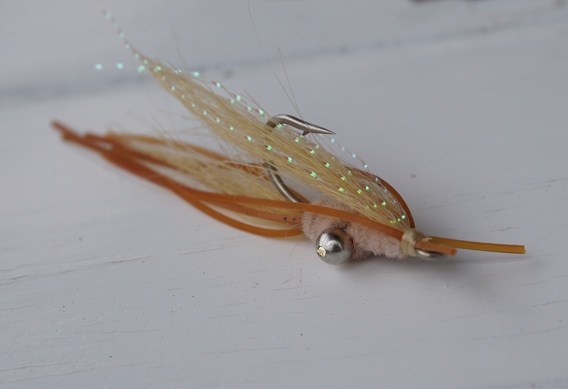
The Squimp Fly is very simple to tie, but lethal for countless flats species.
The Squimp fly very closely imitates a small shrimp, which is the main forage for any bonefish. It also works for other saltwater flats fishes.
The Squimp fly can be tied in many colour variations. Pink works but the traditional tan is the most popular and the most effective. The Squimp fly can be tied with heavy or light eyes, depending on the depth of the flat and the spookiness of the fish.
The Woolly Bugger is a very versatile pattern that will catch fish on virtually any lake or river. It can be tied in a variety of colour combinations, usually natural ones such at black, brown and olive.
The basic woolly bugger pattern is fairly simple, however, don’t be afraid to experiment. Remember, any fly that catches fish is a good fly. Below you’ll find some variations as tied by Club member and Fly Tie Coordinator Ben Hicks (red was the colour of the day, apparently).
[...]
[...]
[...]
[...]
Primarily tied as a general nymph pattern, the Rabbit Fly also makes a pretty good imitation of small dragonfly nymphs that emerge in huge numbers on many Australian lakes. The Rabbit Fly has a collar and tail of soft rabbit fur that moves well in the water, even when the fly is retrieved very slowly.
[...]
The appropriately named Foxy's Horror is designed by Rod Fox, of Hunter Valley Fly Fishing Club, is a great bass fly for rivers.