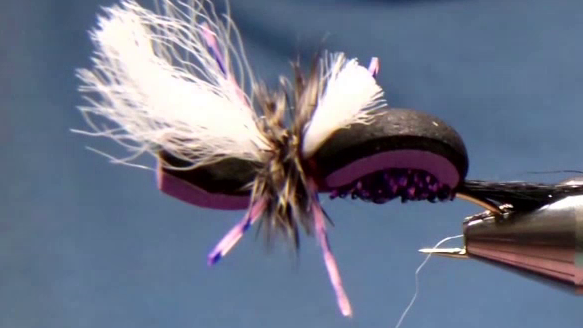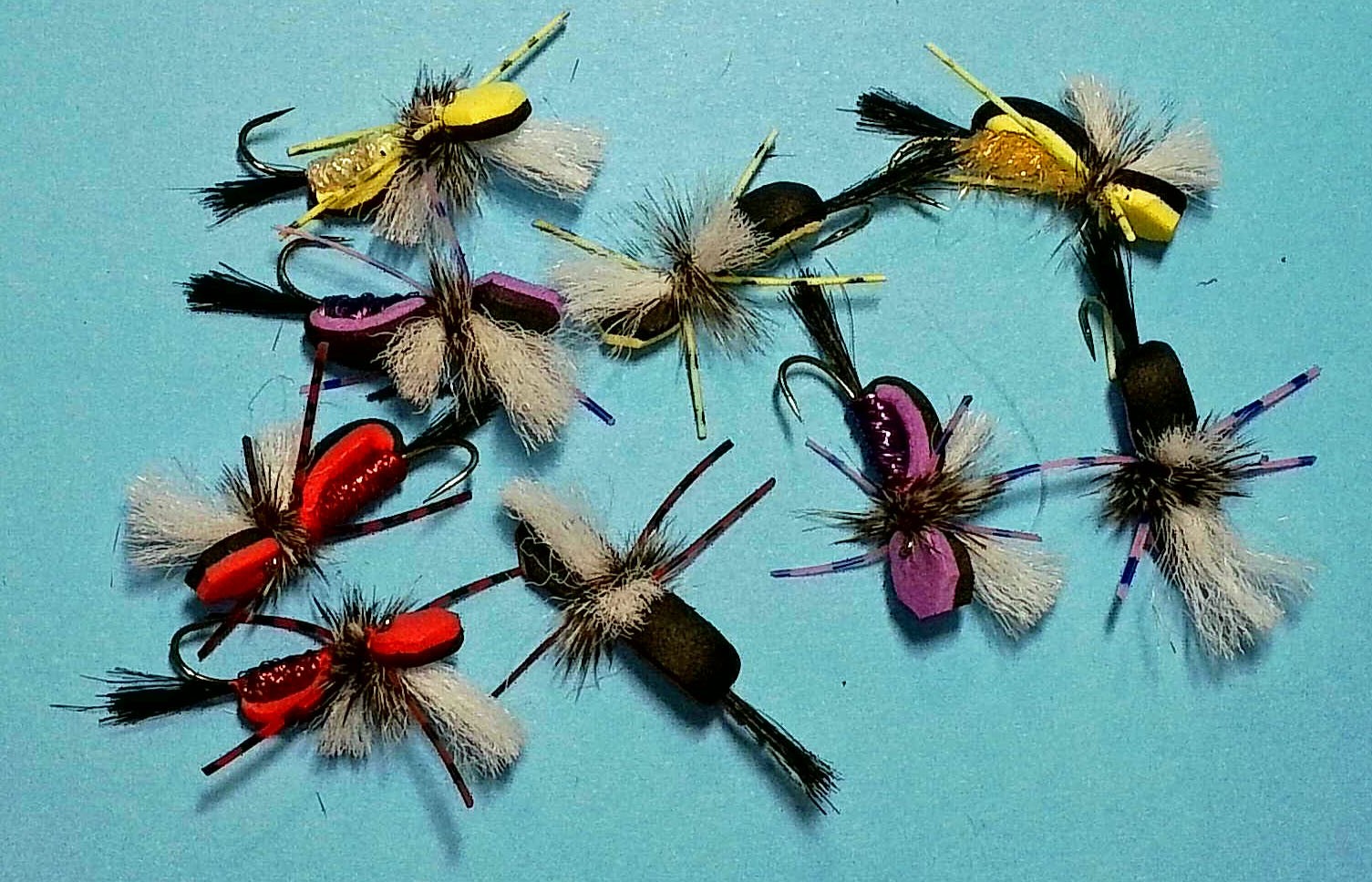

The Hippie Stomper Hopper is Fed’s take on Andrew Grillos’s original Hippie Stomper — a rugged, foam-bodied dry fly that combines buoyancy, visibility and a versatile terrestrial silhouette for trout (or bass!)
The Hippie Stomper is rightly praised as a “giant foam Humpy”: a foam-body, high-floating, dry-fly pattern that works just as well as a beetle, ant, hopper, or general terrestrial. Its buoyancy, visibility and bug-like silhouette make it a stellar choice for summer and autumn dry-fly sessions, or as the top fly in a dry-dropper rig.
The original Hippie Stomper isn’t the easiest fly to tie; probably an intermediate level pattern. Getting the over-body foam tied in just right and building a smooth under-body beneath takes a few tries before it starts to look “right”. The proportions — body length, wing, hackle, legs — often need a little tweaking before everything aligns.
That said: the Hippie Stomper, when done right, is simpler than tying a “well-done” classic Humpy — and I think it ends up more visible and effective.
How to Use the Hippie Stomper Hopper
This hopper conversion of the Hippie Stomper works especially well as a summer terrestrial or in a “hopper-and-dropper” setup. On a size-8 hook, it has a chunkier profile — perfect as a top fly that still floats high and grabs attention.
With the foam body, rubber legs, full hackle and poly-yarn wing, my version stays buoyant and visible even after multiple casts; a must when casting above riffles, around bank structure, or across slow pools. And that sparkle-flash underbody adds a subtle glint beneath the foam that seems to catch the trout’s eye when the fly lands.
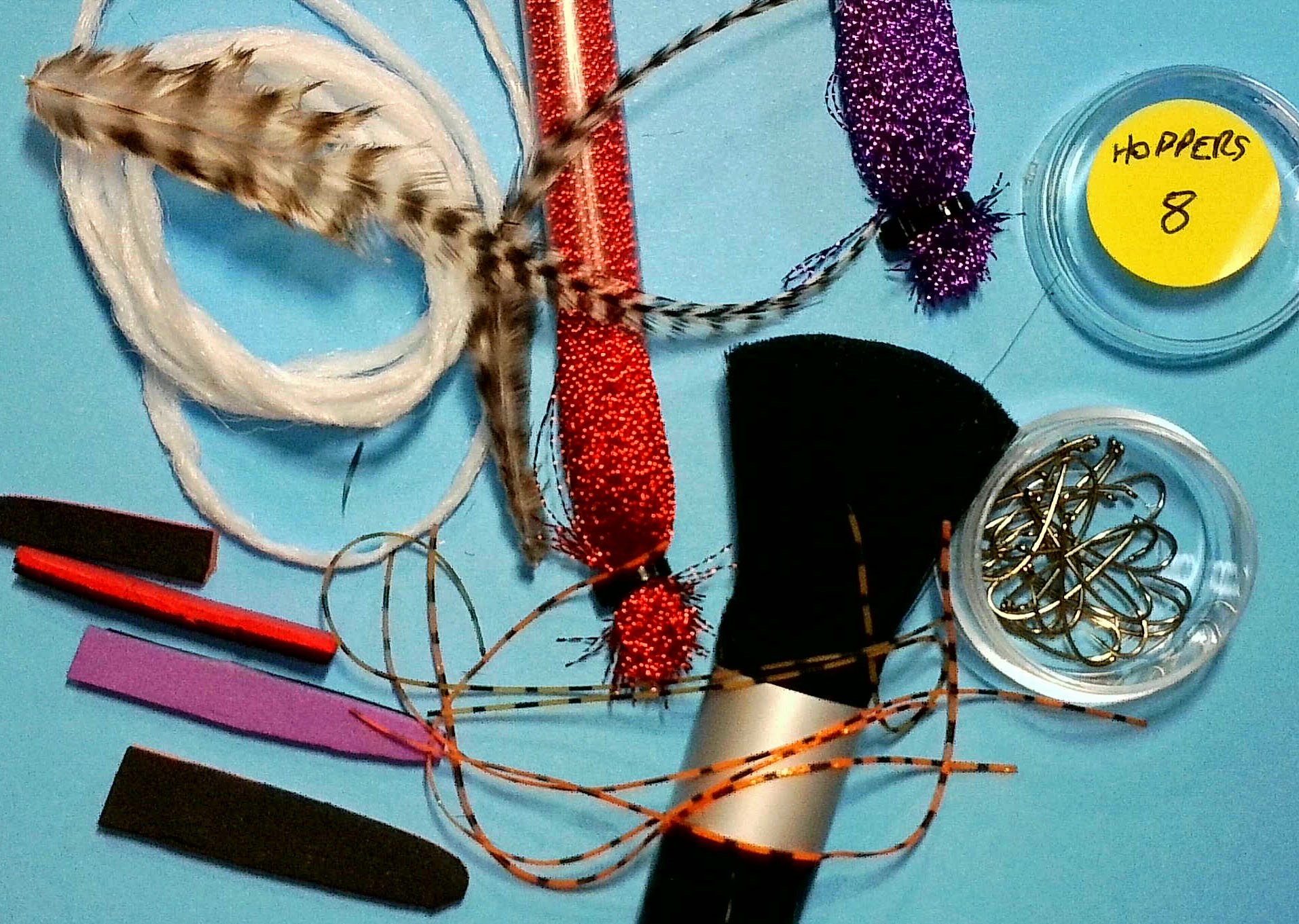
Materials
- Hook:Size 8 Hopper
- Thread:Woolly nylon, black
- Tail: Makeup-brush fibres
- Body: Two-tone foam strips (top + underbody)
- Underbody flash: Sparkle flash to match
- Legs:Round rubber legs
- Wing:Poly yarn
- Hackle:Grizzly dry-fly hackle
Tying Instructions
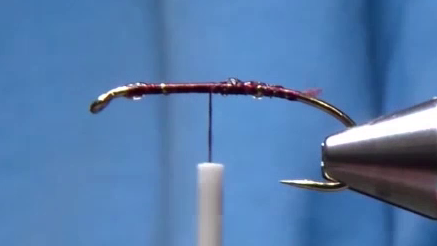
- Apply a light coat of Sally Hansen’s to the hook shank to prevent thread slippage.
- Start the thread and cover the hook shank.
- Tie in the makeup-brush tail.
- Tie in the two foam body pieces (note: the bottom colour becomes the top when folded over).
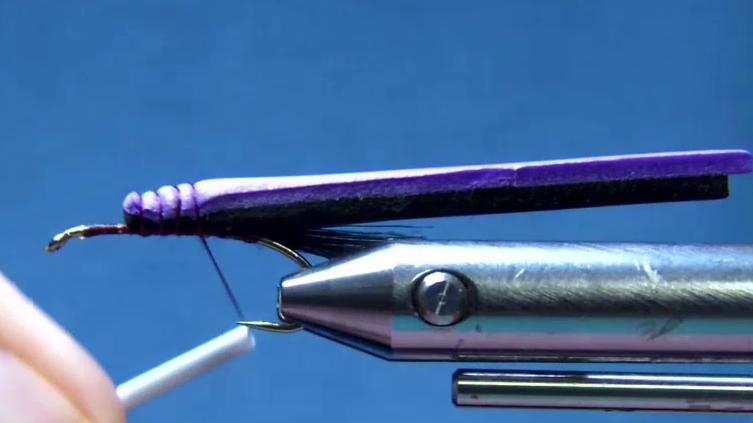
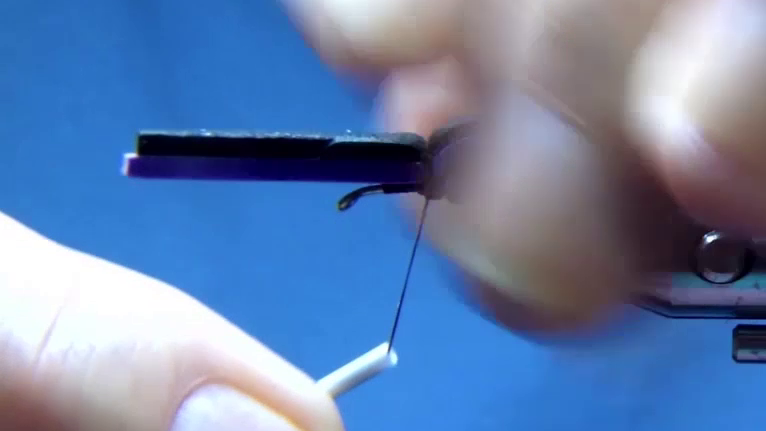
- Tie in and wrap the flash body material; add a touch of Sally Hansen’s for durability.
- Fold the foam forward and tie it down.
- Advance the thread to the eye and secure the foam again.
- Wrap the thread back to the midpoint to create space for the thorax.
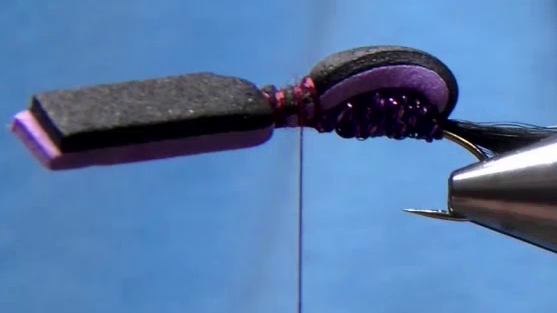
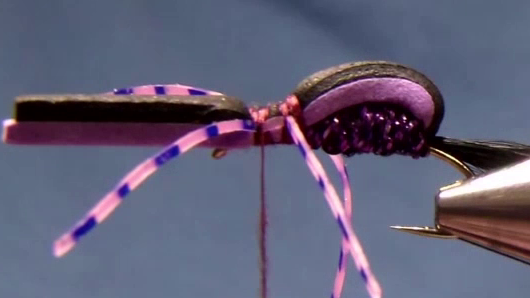
- Tie in the rubber legs folded together on top.
- Position the legs so two sit on each side of the fly.
- Tie in the poly yarn on top.
- Tie in the hackle and wrap it through the poly yarn post.
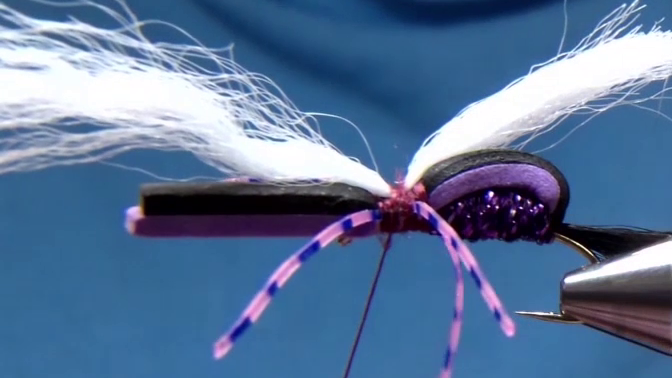
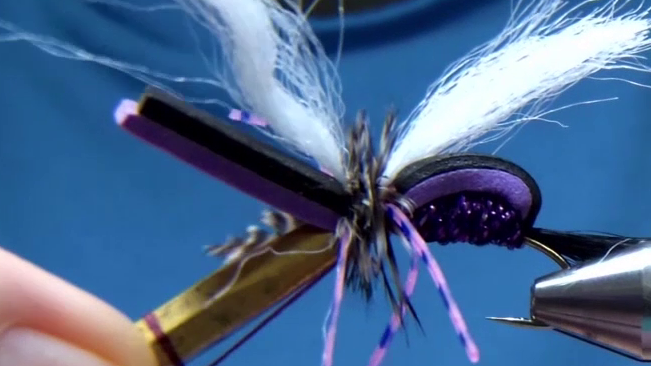
- Continue wrapping hackle to fill the thorax area, then tie it off.
- Half-hitch and whip-finish at the eye.
- Trim the foam head and poly yarn (long in front, short in back).
- Trim the legs to length.
- Trim the bottom hackle flat for stability.