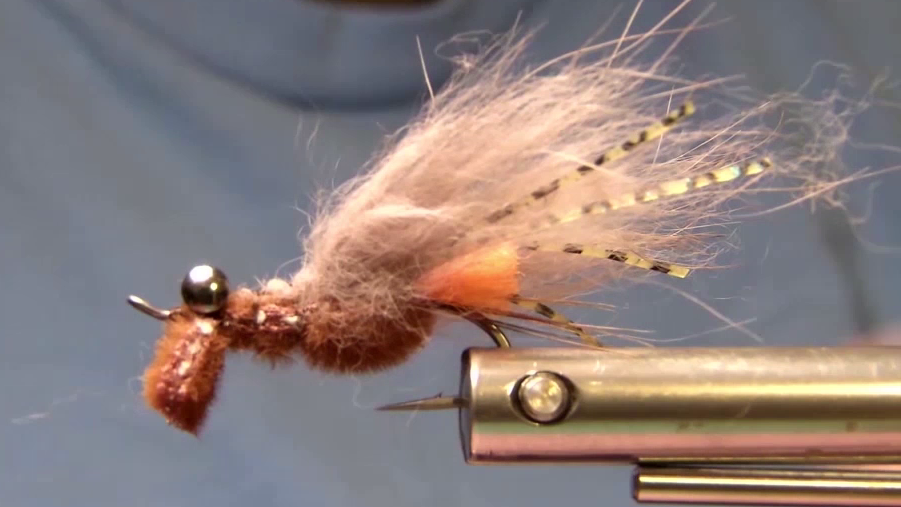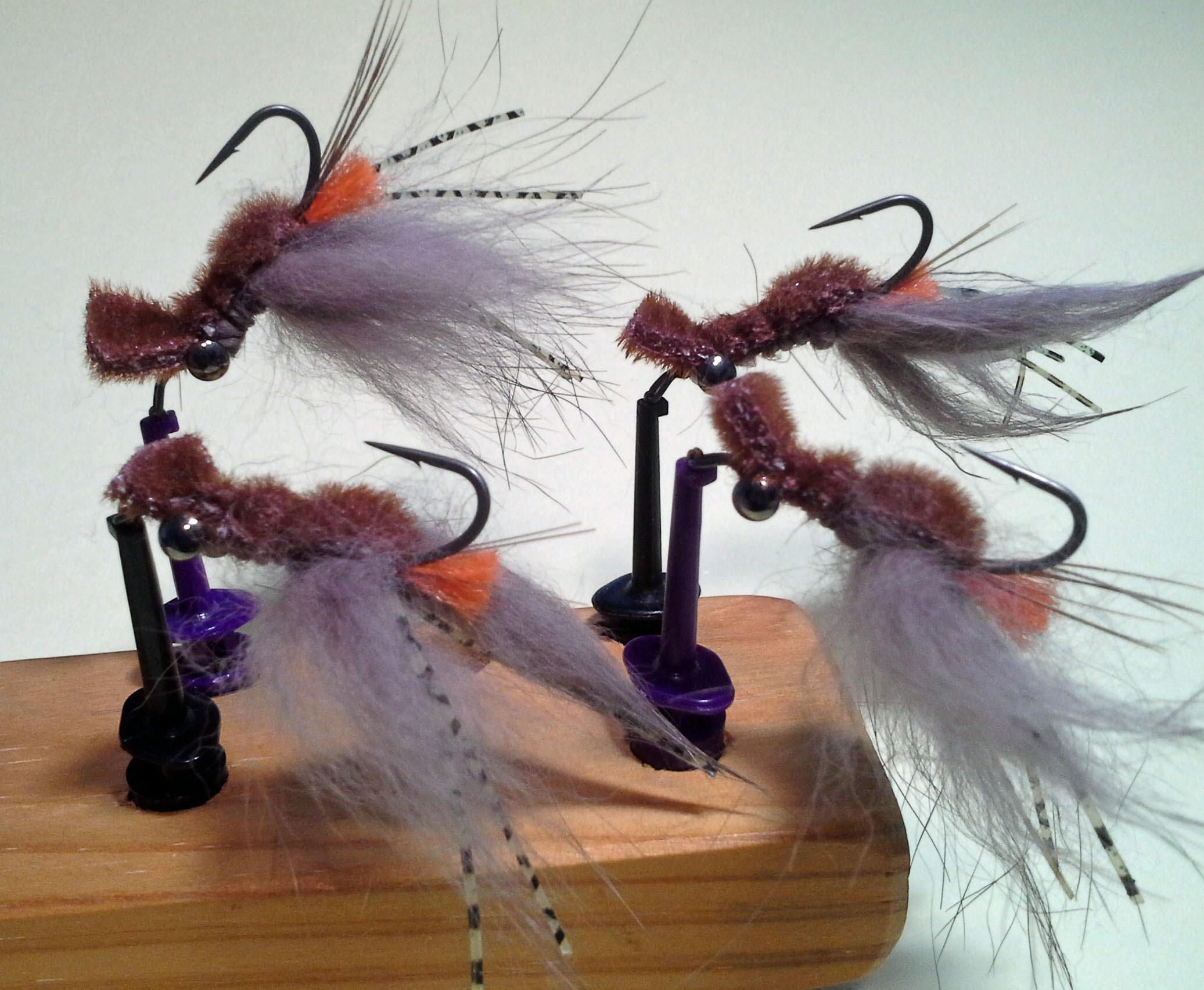

Fed’s Begley Crayfish is an Australianised re-interpretation of a pattern created by Tim Collins of the Gary Begley Ohio Fly Tying Guild.
Fed laughs that this fly is “pretty ugly … until it gets wet” — but that’s part of the beauty. It’s not about finesse; it’s about underwater motion, interest and profile. When it hits water, every fibre collapses, undulates and suggests a fleeing crayfish.
Here’s how Fed ties his version:
Ugly Until It Works
On the vise, this fly can look like a jumble of fibres — legs, whiskers, tails all pointing in different directions. But once submerged:
This is exactly the kind of pattern that’s suggestive rather than photo-realistic — and that’s often enough to trigger follows and strikes in systems where crayfish are common. Realistic crayfish flies aren’t always about precision; it’s about suggestion, bulk, motion and contrast near the bottom or in structure-laden water.
Materials
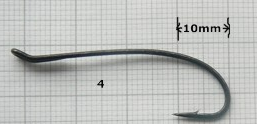
- Hook:Salmon size 4
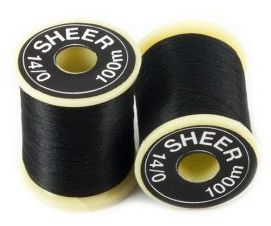
- Thread:Sheer 14/0
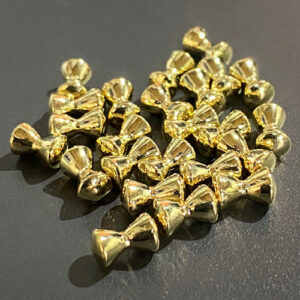
- Eyes:Dumbbell eyes
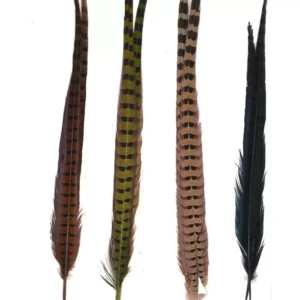
- Antennae:Pheasant tail fibres
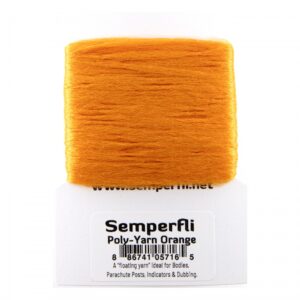
- Antennae Plus:Orange poly yarn
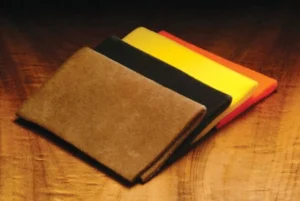
- Shell Back:Furry Foam
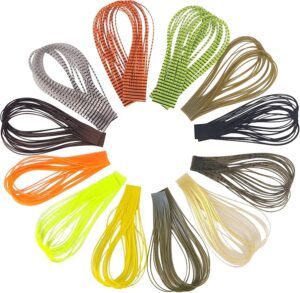
- Legs:Rubber legs
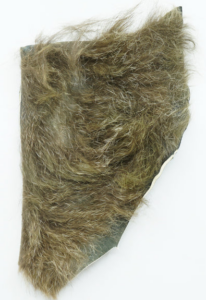
- Claws:Kangaroo Zonker strip
Tying Instructions
Preparation:
- Cut the kangaroo zonker strips to size.
- Wash and allow them to dry completely before tying.
Initial Steps:
- Secure the hook in the vice and cover the front third of the hook shank with thread.
- Tie in the dumbbell eyes.
- Wrap the thread back to the hook barb.
- Tie in pheasant tail fibres on each side of the hook, extending approximately half the length of the hook shank.
- Tie in the poly yarn antennae, trimmed to about half the final antenna length.
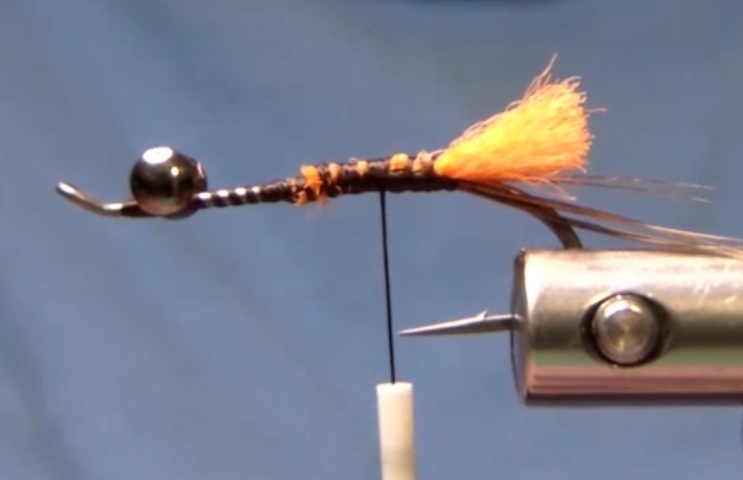
Body and Claws
- Reattach the thread to the hook.
- Invert the hook and tie in the foam strip in front of the hook point.
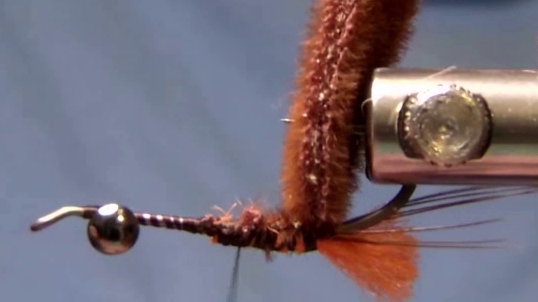
- Fold the foam upward and temporarily secure it over the hook point.
- At the hook point, tie in two rubber legs on each side of the hook.
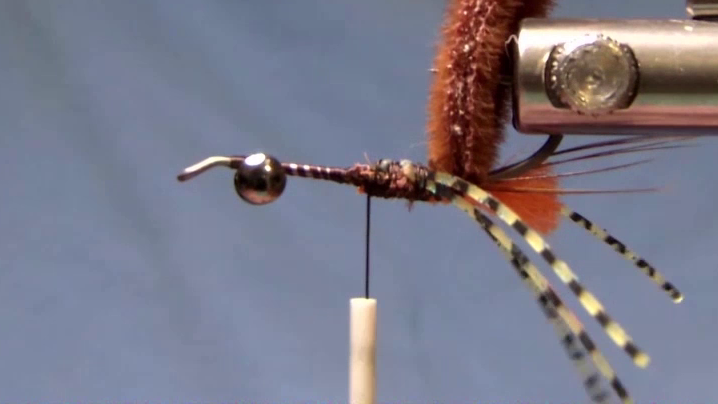
- Trim the rubber legs so they end just forward of the hook eye.
- Tie in the kangaroo zonker strip at the hook point, with the hair pointing toward the rear.
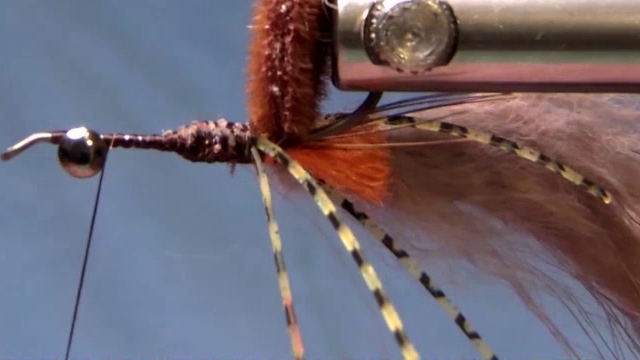
- Wrap the zonker forward to the dumbbell eyes.
- Tie off the zonker and wrap the thread back toward the rear of the hook.
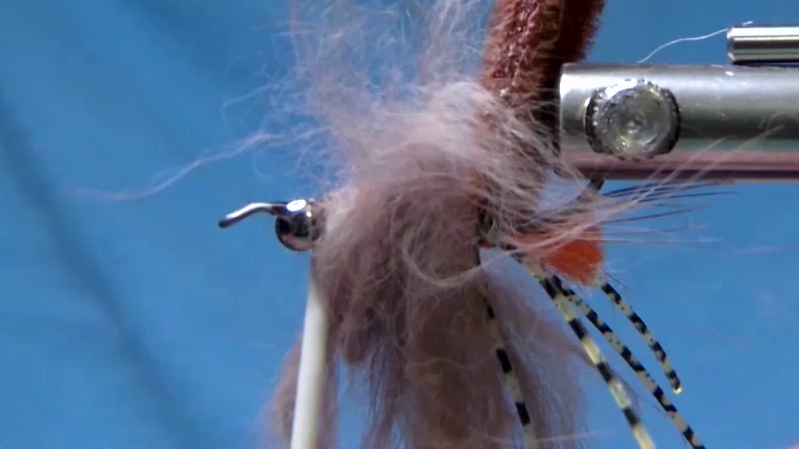
- Push the kangaroo hair evenly to both sides.
- Fold the foam forward over the kangaroo strip and secure it with thread.
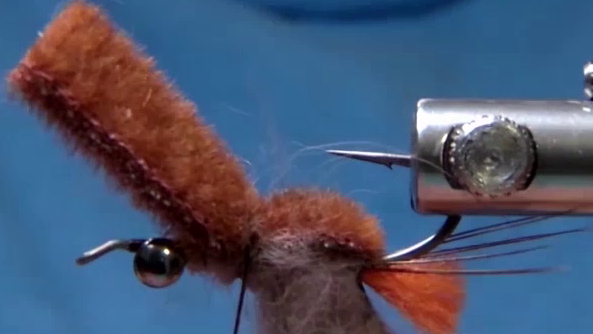
- Advance the thread forward, forming two small body segments.
- Trim the foam just past the hook eye.
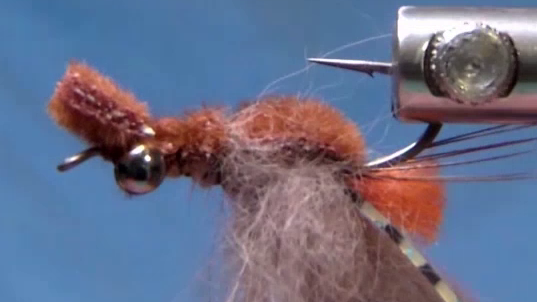
- Finish with two double half hitches in front of the eyes.