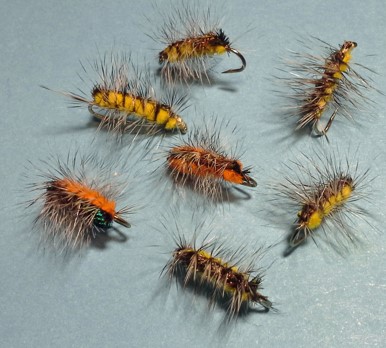

Fed’s Crackleback Caterpillar is a Paul’s take on a proven classic, blending old-school versatility with contemporary design ideas. This pattern is inspired by Rick Takahashi’s Crackleback Caterpillar from his book Modern Terrestrials: Tying & Fishing The World’s Most Effective Patterns, and builds on a fly that has been catching fish for over seventy years.
The original Crackleback was created in 1952 by Ed Story of Feather-Craft. Since then, it has earned a reputation as one of the most adaptable flies ever devised. Able to be fished as both a dry and a wet fly, the Crackleback can imitate everything from emerging insects to drowned terrestrials, depending on how it’s tied and presented.
What sets the Crackleback apart is its distinctive construction. A peacock herl back creates the characteristic “crackling” effect that gives the fly its name. This shimmering, segmented profile adds life and contrast in the water, making the pattern highly visible and attractive to fish in a wide range of conditions.
Fed’s Crackleback Caterpillar variant shifts the traditional dubbed body toward a brighter, chenille-based caterpillar profile while retaining the classic peacock herl back and palmered hackle that define the Crackleback’s action and appeal.
Materials
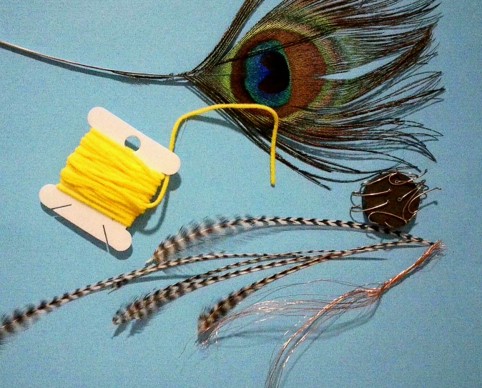
- Hook:Emerger size 14.
- Thread:Sheer 14/0 yellow.
- Rib:Fine gold or copper wire.
- Body:Ultra fine chenille (I used yellow and orange).
- Wing Case:Peacock Herl.
- Hackle:Grizzly
Tying Instructions
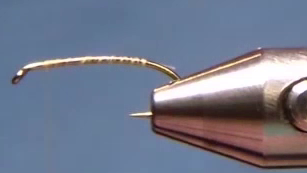
- Crush the barbs on all hooks.
- Start the thread and cover the hook shank back to the bend, then return to the eye.
- Tie in the ribbing wire and return the thread to the eye.
- Tie in four strands of peacock herl and return the thread to the eye.
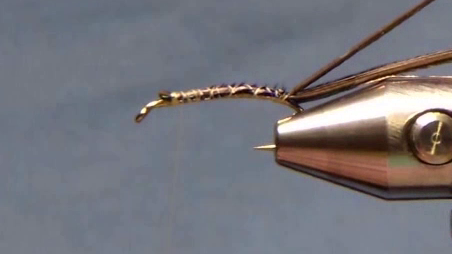
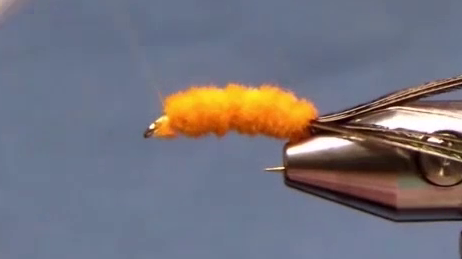
- Tie in the chenille at the eye, then run the thread back to the bend and return to the eye.
- Wrap the chenille forward to form the body and tie it off.
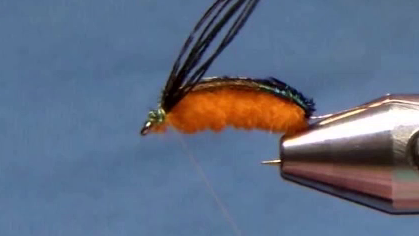
- Fold the peacock herl back over the body and secure it at the eye.
- Tie in the hackle at the eye.
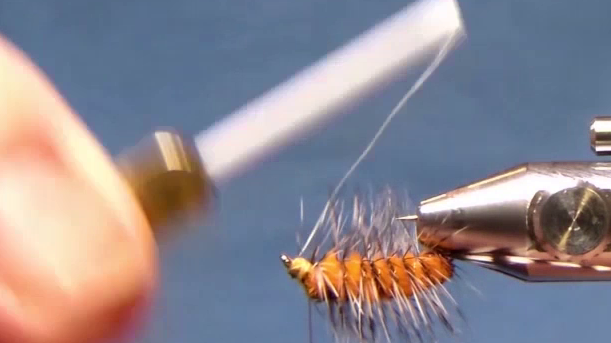
- Palmer the hackle back to the bend and secure it with the ribbing wire. Use hackle pliers for weight on the hackle and wire.
- Rib the body forward to the eye and tie off the wire.
- Finish with a half hitch, then a double half hitch.
- Cut the excess wire and hackle.
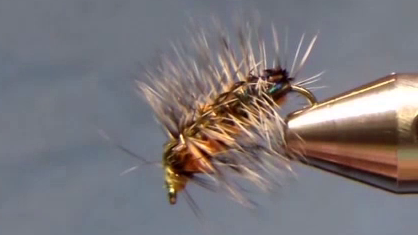
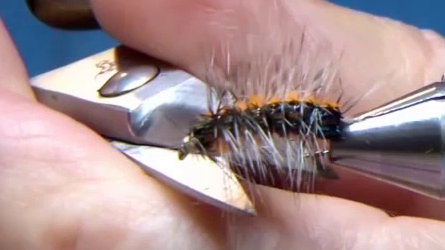
- Trim the hackle fibres on the underside.